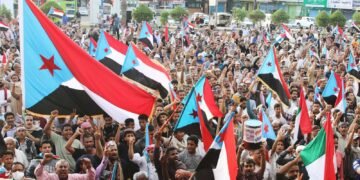























Yemen’s Southern Separatists Announce New Constitution, Escalating Tensions with Saudi Arabia
Yemen’s Southern Transitional Council (STC) has introduced a new constitution, signaling ambitions for independence from the north, though the move’s feasibility remains uncertain. This escalation highlights the growing rifts between Saudi Arabia and the United Arab Emirates (UAE), two key players in the ongoing civil conflict in Yemen.
Why It Matters
This declaration reflects a significant shift in Yemen’s political landscape, further complicating the already intricate dynamics between local factions and foreign powers. With a decade-long civil war ravaging Yemen, the STC’s push for self-determination raises questions about the future of the region and the coalition formed to combat Iranian influence through Houthi rebels.
Key Developments
- The STC’s proposed constitution is set to be in effect for two years, after which a referendum on independence will take place.
- Saudi Arabia responded with airstrikes targeting STC positions in Hadramout province as part of an effort to reclaim lost control.
- The UAE has announced a withdrawal of its troops from Yemen, following tensions with the STC.
- Aidarous al Zoubeidi, STC’s leader, urged dialogue between northern and southern factions during the interim two years.
Full Report
New Constitution and Referendum
The STC has declared the establishment of "the State of South Arabia" through a new constitution, mirroring the territory of the former People’s Democratic Republic of Yemen, which existed from 1967 to 1990. Al Zoubeidi stated that the constitution would remain in effect for two years, after which a referendum would allow the southern population to vote on their right to self-determination. He emphasized the need for dialogue among relevant parties in Yemen to create mechanisms that would protect this right.
Saudi Arabia Responds
In response to the STC’s announcement, Saudi Arabia ramped up its military actions against STC forces. This included airstrikes on camps and military positions held by the separatists in Hadramout province. The Saudi military claims these actions are aimed at reclaiming territories seized by STC-linked fighters in recent weeks, including the presidential palace in Aden, which has resulted in the Yemeni government’s relocation to Riyadh.
UAE’s Position
The UAE announced a troop withdrawal from Yemen shortly after the STC’s new constitution was introduced, underscoring its role as a supporter of the separatists. Simultaneously, the UAE’s foreign ministry called for restraint and coordination, emphasizing a commitment to regional stability over hasty decisions. The situation is delicate, with the potential to disrupt the fragile balance in the ongoing proxy conflict against the Houthi rebels.
Context & Previous Events
Recent months have seen a sharp escalation in violence, with STC-affiliated forces taking control of two southern provinces from Saudi-backed troops. The Saudi-led coalition, which includes the UAE, has aimed to restore Yemen’s internationally recognized government that was ousted by Houthi rebels in the north. However, internal divisions within the coalition and escalating confrontations hint at a fragmentation that risks undermining their unified efforts.