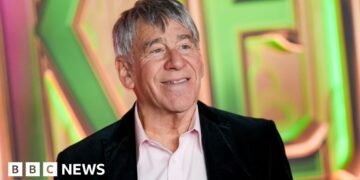























Stephen Schwartz Declines Participation at Kennedy Center Amid Controversy Over Name Change
Composer Stephen Schwartz has announced that he will not perform at the Kennedy Center following the board’s decision to rename the venue, now including President Donald Trump’s name. Schwartz expressed that participating at the center has become a statement of ideology rather than an embrace of artistic expression.
Why It Matters
This situation highlights the political tensions surrounding cultural institutions and their leadership. The Kennedy Center, traditionally seen as an apolitical space for the arts, is now navigating significant backlash over its recent decisions, reflecting broader societal divisions over national identity and artistic freedom.
Key Developments
- Schwartz stated his appearance at the Kennedy Center would now symbolize an ideological stance, and he would refrain from performing until this perception changes.
- Richard Grenell, president of the Kennedy Center, refuted claims that Schwartz had committed to attending a gala scheduled for May, labeling the reports as “totally bogus.”
- Two musical groups have canceled their performances at the center in light of the name change, although they did not specifically cite political reasons.
- Lawmakers and scholars contest the legality of the name change, suggesting that Congressional approval is necessary given the venue’s legislative naming history.
- Former Congressman Joe Kennedy III voiced strong opposition to the renaming, emphasizing that it undermines the memory of his great-uncle, President John F. Kennedy.
Full Report
Schwartz’s Stance
Stephen Schwartz, the acclaimed composer behind “Wicked,” stated that his involvement with the Kennedy Center has now become intertwined with ideological implications. In a recent statement, he clarified that he would not be participating at the center as long as this ideological framing persists.
Reactions from the Kennedy Center
In response, Richard Grenell denied Schwartz’s claims, insisting that there was never an agreement for Schwartz to attend the gala. Grenell criticized media reports regarding Schwartz’s withdrawal as misleading, attributing the assertions to “woke high school reporters.” He also declared that the institution should not be caught in the crossfire of political disputes.
Cancellations and Artist Responses
Schwartz is not alone in his decision to withdraw; two musical acts, including the jazz band The Cookers, have canceled performances without citing direct political motivations. Additionally, Doug Varone and Dancers announced their own cancellation over the name change, expressing a sense of disillusionment with the venue’s current direction.
Legal and Historical Considerations
The renaming of the Kennedy Center has sparked debate among some members of Congress and legal scholars who argue that given its establishment by a 1964 law, any alteration must involve legislative approval. This controversy adds another layer to the ongoing discourse regarding art, politics, and memory in American culture.
Context & Previous Events
The Kennedy Center’s decision to rename the venue to the Donald J. Trump and John F. Kennedy Memorial Center for the Performing Arts has ignited widespread discontent. Trump’s allies filled the center’s board before this change, leading to pressures from various artists disinclined to associate with a venue now perceived as partisan. Family members of President John F. Kennedy have condemned this alteration, arguing it disrespects the venue’s original intent as a tribute to the martyred leader.