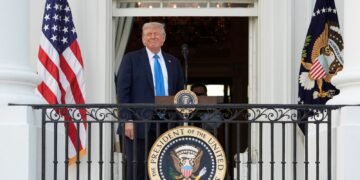























Trump Unveils New National Security Strategy, Signaling Shift in Global Engagement
President Trump’s newly released National Security Strategy outlines a marked departure from traditional U.S. foreign policy, emphasizing a narrower focus on American interests. The 33-page document raises critical concerns for both allies and adversaries regarding the future of international relations and America’s role on the global stage.
Why It Matters
This shift in policy reflects a significant redefinition of U.S. strategic priorities, moving away from historical efforts to uphold a democratic, rules-based international order. As these changes take shape, their implications will likely reverberate through global alliances and affect diplomatic relationships worldwide.
Key Developments
- The document asserts that American strategy has been misaligned for years and posits a narrower scope for U.S. foreign policy.
- It warns Europe could face "civilizational erasure" within two decades, questioning the reliability of NATO allies.
- The strategy calls for a reduction of U.S. involvement in the Middle East, viewing it instead as a source of investment opportunities.
- For the Western Hemisphere, the focus will shift towards enhancing American influence and countering non-regional threats.
- American policy toward Africa will prioritize trade over the promotion of liberal democratic values.
- Mass migration is criticized for threatening the concept of nation-states, particularly in Europe.
Full Report
A New Approach to Foreign Relations
The National Security Strategy marks a stark contrast to previous administrations’ documents. It does not envision America as the primary arbiter of democratic governance globally. Instead, the report argues for prioritizing trade with nations without imposing external values, thus redefining the market-driven nature of U.S. diplomacy.
Criticism of European Policies
The strategy is particularly critical of ongoing mass migration and the European Union’s handling of these issues. It suggests that the current trajectory could lead to a complete transformation of European identity, further complicating the reliability of European nations as allies. The document states that many European countries are struggling with governance issues that undermine their stability.
Support for ‘Patriotic’ Politics
In a notable break from past U.S. practices, the strategy encourages support for "patriotic European parties" that align with Trump’s ideals. This endorsement implies a willingness to engage in the internal politics of allied nations—a significant shift from the traditional hands-off U.S. approach.
European-Russian Relations
Regarding conflicts in Ukraine, the strategy outlines the need for U.S. diplomatic involvement but underscores a lack of presumption that the U.S. would enter any potential conflict. This approach diverges significantly from President Biden’s earlier commitments to European security.
Focus on Asia and the Indo-Pacific
In contrast to reservations about Europe, the document presents the Indo-Pacific region as a point of opportunity. It advocates for strengthened partnerships and emphasizes maintaining military superiority over China, aligning economic cooperation with enhanced defense strategies.
Western Hemisphere Strategy
The strategy reiterates the Monroe Doctrine, aiming to restore U.S. influence in the Western Hemisphere. It seeks to limit non-regional competitors’ capabilities within the region, addressing concerns such as drug trafficking and geopolitical tensions.
Context & Previous Events
The current National Security Strategy comes on the heels of documents from both President Biden and Trump’s previous administration. Biden’s 2022 strategy reaffirmed a commitment to a stable, democratic European order, whereas Trump’s earlier 2017 strategy framed global politics as a struggle between oppressive regimes and free societies.
As the U.S. redefines its role in the world, the ramifications of this new security strategy will likely play a critical part in shaping international relations and America’s position within them for years to come.