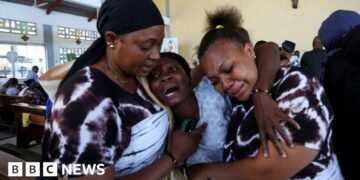























Calls for Accountability Rise Amid Tanzania’s Electoral Violence
Western embassies in Tanzania, including representatives from the UK and France, are urging the Tanzanian government to release the remains of individuals killed during the electoral violence that erupted following last month’s presidential election. Reports of extrajudicial killings, enforced disappearances, and arbitrary detentions have raised significant international concerns about the state of human rights in the country.
Why It Matters
The recent surge in political unrest in Tanzania has drawn the attention of global diplomatic entities, highlighting fears of escalating authoritarianism under President Samia Suluhu Hassan’s administration. The situation poses serious implications not just for Tanzanian citizens, but also for international relations and regional stability, as allegations of human rights abuses accumulate.
Key Developments
- Western embassies have called for the release of bodies to families of victims of the October violence.
- The Tanzanian government announced the formation of a commission of inquiry to investigate the causes of the unrest.
- Over 240 people have faced treason charges, with some now being released after presidential urging for leniency.
- Human rights organizations reported that illegal detentions and violence against protesters have increased since the election.
- The US government is re-evaluating its relations with Tanzania due to the heavy-handed response to dissent.
Full Report
International Calls for Action
A coalition of Western diplomatic missions has released a joint statement expressing concern over the government’s handling of the electoral fallout. They highlighted credible reports indicating the existence of extrajudicial killings and the concealment of body counts amid widespread unrest. They urged Tanzanian authorities to allow families to retrieve the bodies of their loved ones and demanded the immediate release of political prisoners and access to legal and medical assistance for detainees.
Tanzania’s Government Response
In response to the mounting international pressure, Tanzania announced the establishment of a commission of inquiry. Government officials indicated that this commission would aim to provide clarity on the events that unfolded during the unrest. Nevertheless, Tanzania’s Foreign Affairs Ministry has emphasized the need for external parties to await the inquiry’s findings before forming conclusions about the incidents.
Escalation of Tensions
In the aftermath of the controversial election, the government faced accusations of using excessive force during protests. President Hassan, who claimed a victory of nearly 98%, has defended the electoral process against opposition allegations that it was a “mockery of democracy.” Critics have pointed to an internet blackout and threats to those disseminating images of the protests as indicative of a crackdown on civil liberties.
Despite the U.S. expressing concerns over Tanzania’s approach to dissent, Hassan has accused foreign nations of interference and articulated her administration’s commitment to confronting any protests deemed as attempts to destabilize her government.
Context & Previous Events
The unrest was triggered by the October 29 presidential election results, which disqualified main opposition candidates and prompted widespread accusations of electoral fraud. Since then, the Tanzanian government has faced increased scrutiny and condemnation from various international bodies and local civil rights organizations. The subsequent crackdown on dissent included the detention of academics and political leaders, contributing to the escalating tension within the nation’s political landscape.