






















Desperate Search for Missing Children Amid West Africa’s Human Trafficking Crisis
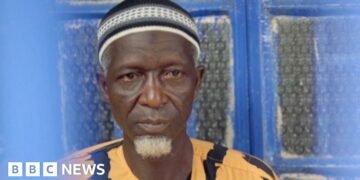
Foday Musa’s nightmare has stretched nearly two years as he endures the anguish of being separated from his children, who were lured away by human traffickers with false promises of work abroad. As the father grapples with his heartbreak, authorities are uncovering a widespread trafficking operation exploiting vulnerable individuals across West Africa.
Why It Matters
Musa’s plight highlights the severe human trafficking crisis that has deteriorated within West Africa, as countless families fall prey to false job schemes. This growing issue not only devastates families but also poses a broader societal dilemma that complicates efforts to curb human trafficking in an already vulnerable region.
Key Developments
-
Foday Musa has not seen his children for nearly two years, after they were lured from their remote village in Guinea by scammers.
-
Authorities in Sierra Leone have conducted more than 20 rescue operations in the past year, freeing hundreds of victims from human traffickers masquerading as employment recruiters.
-
Interpol is prioritizing cases like Musa’s, while criminal gangs exploit the region’s under-resourced law enforcement to target vulnerable populations.
- A young woman named Aminata shared her harrowing experience of being trafficked, highlighting the psychological toll on victims who feel responsible for luring others into the scam.
Full Report
The Search for Missing Children
Foday Musa, a resident from Guinea’s Faranah region, recalls the last voice message from his son, an emotional plea for help that underscores the desperation faced by his family. In February 2024, Musa’s 22-year-old son and 18-year-old daughter were among a group of seven individuals promised jobs abroad. The promised employment never materialized, resulting in their abduction by traffickers, who transported them across the border into Sierra Leone.
"My heart is broken. I can’t stop crying," Musa expressed. Since then, he has been on a quest to find his children, accruing significant debt by paying $25,000 to traffickers in hopes of securing their return.
Rescue Operations
Musa’s case gained attention when Interpol in Guinea mobilized efforts to locate him and others who had become victims of the trafficking scheme. In August 2024, following a tip-off regarding a large number of young people being held captive in Sierra Leone, Musa joined authorities in a raid in Makeni. While they rescued several victims, his children were not found.
To date, the police have conducted over 20 raids like this one in which they freed hundreds of young people, many afflicted by similar circumstances. Mahmoud Conteh, head of investigations at the anti-trafficking unit of the Sierra Leone police, confirmed the difficulties that traffickers face in evading capture: "It’s very easy for these traffickers to maneuver across each of our borders."
Aminata’s Harrowing Experience
One of the young victims, identified as Aminata for her safety, described her harrowing experience after being misled by a friend who introduced her to fake QNET representatives. After paying $1,000, her family’s savings, with promises of study and work in the U.S., she found herself trapped and forced into unspeakable circumstances to survive.
"After they recruit you, they feed you, they take care of you. But as time goes by, they stop," she stated. Aminata’s experience illustrates the manipulative tactics used by traffickers, who create a facade of prosperity that ultimately leads to exploitation.
Context & Previous Events
The human trafficking crisis in West Africa has escalated over recent years, with gangs leveraging false employment schemes to exploit vulnerable individuals eager for a better life. Founded in Hong Kong, QNET is a legitimate wellness company; however, it has been misappropriated by criminals using its name to prey upon the desperate. Although QNET has launched a campaign against scams, the impact on local populations has been devastating.
Despite significant police efforts in Sierra Leone to combat this crisis, systemic challenges such as underfunded and under-resourced law enforcement hinder effective prosecution of traffickers. The U.S. State Department has reported painfully low conviction rates since the passage of Sierra Leone’s anti-trafficking act, revealing an urgent need for broader support and stronger legal frameworks to protect victims.
Foday Musa’s search remains unresolved as he returns to Guinea, yearning to be reunited with his children. The situation reflects not only personal tragedy but also a societal crisis that continues to unfold across West Africa, demanding urgent attention and action.