






















Minnesota’s ICE Killings Echos Troubling History
While the recent fatal shootings involving federal immigration agents in Minnesota are not unique, they resonate profoundly with lessons from the past. The events raising alarms about community safety and trust draw parallels to historical conflicts, particularly those faced during the Troubles in Northern Ireland.
Why It Matters
These incidents are not merely isolated acts of violence; they reflect broader systemic issues regarding law enforcement’s role in communities, especially marginalized ones. The escalation of armed presence in civilian areas raises critical questions about public safety, civil liberties, and the potential for a cycle of violence that endangers both citizens and law enforcement alike.
Key Developments
- Recent ICE shootings in Minnesota have resulted in fatalities, causing public outcry and speculation about the agency’s methods.
- Historical context from Northern Ireland’s Troubles illustrates a pattern where armed state presence may exacerbate rather than mitigate conflict.
- Heightened tensions in the community prompt concerns regarding the potential for increased violence and retaliatory actions.
Full Report
A Disturbing Parallel
The recent violence in Minnesota involving ICE agents signals a dangerous trend reminiscent of tumultuous times in Northern Ireland. The armed presence of federal enforcement officers in residential neighborhoods is perceived as a coercive measure rather than a safety initiative. Following incidents like these, communities often respond with protests, while authorities react with increased security measures.
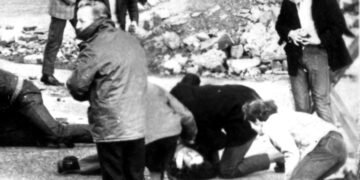
This cycle mirrors a historical truth observed in Northern Ireland during its conflict. British soldiers, initially deployed to restore order, often became more a source of trauma than a stabilizing force. An eyewitness to the tragic Bloody Sunday reported a swift surge in recruitment for paramilitary groups following that day of violent confrontation, highlighting the complex dynamics of perceived threat and rendered safety.
The Cycle of Violence
As armed agents patrol neighborhoods, the visible show of force raises discomfort among many residents, particularly those in nationalist communities. Instead of fostering feelings of protection, this militarized approach fosters animosity and a push towards armed self-defense among the populace. This creates a vicious cycle, where the presence of arms leads to escalated responses from the state.
Minnesota’s current situation underscores the potential for violence to breed more violence, leading to serious questions about the implications of government actions on community reactions. The broader question arises: “Who is allowed to wield weaponry amid rising tensions?”
Context & Previous Events
Northern Ireland grappled with “The Troubles” for three decades, resulting in the loss of approximately 3,500 lives. One significant event, Bloody Sunday, involved British soldiers shooting 14 civilians, which drastically altered the conflict’s trajectory and recruitment dynamics for paramilitary forces. Over time, the lesson became clear: peace comes from reducing the government’s armed presence on the streets.
While Minnesota has not yet descended to such depths of conflict, early warnings are evident in the ongoing violence and community unrest. These events remind us that without thoughtful intervention and community trust-building, history could repeat itself.






