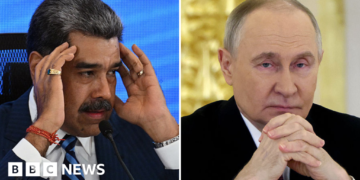























Venezuelan President Nicolás Maduro stands at a precarious juncture as his once steadfast support from China and Russia appears to wane. Increasingly cautious amid global tensions, both nations now seem hesitant to offer the military and financial backing that Venezuela has relied upon for years.
The changing dynamics of international relations, particularly in light of U.S. military maneuvers in the Caribbean, leave Maduro grappling with a stark reality: his allies are no longer the reliable lifelines they once were.
Why It Matters
This shift in support underscores Venezuela’s growing isolation on the global stage, raising concerns about the sustainability of Maduro’s regime. With U.S. deployments signaling a potential escalation in military pressure, the absence of tangible backing from strategic allies could hasten the country’s already dire economic and political crises.
Key Developments
- Venezuela increasingly regarded as a lower priority for China and Russia, particularly after U.S. military buildups.
- Experts claim support from Moscow and Beijing is now largely symbolic, lacking concrete military or financial actions.
- U.S. military operations in the Caribbean are targeting alleged drug trafficking, with implications for regime stability in Venezuela.
- Maduro’s request for military assistance from China and Russia remains unanswered, highlighting his precarious position.
- Both nations are focused on their internal challenges and wary of further U.S. sanctions.
Full Report
Changing Priorities
Venezuela’s historical ties with China and Russia, which flourished under former President Hugo Chávez, are now under scrutiny. According to political experts, these nations have shifted their focus to pressing domestic issues as the geopolitical landscape changes, particularly since the U.S. has resumed a more confrontational policy under President Trump.
The U.S. Military Presence
The United States has intensified its military presence in the Caribbean, deploying significant naval and air assets aimed at combating drug trafficking. This escalating tension includes strikes that have reportedly led to numerous casualties. Analysts suggest that the U.S. strategy is not solely about anti-drug efforts but also a broader initiative to destabilize the Maduro government.
Responses from China and Russia
Despite Maduro’s requests for military assistance, both Russia and China have refrained from providing material support. Russia’s Deputy Foreign Minister recently reaffirmed diplomatic support for Venezuela but stopped short of pledging any military aid. Similarly, Beijing has condemned U.S. actions but remains focused on avoiding any actions that could jeopardize its diplomatic relations with Washington.
Internal Challenges for Venezuela
Venezuela’s political landscape has been further complicated by the recent presidential election, marred by allegations of fraud that have tarnished Maduro’s legitimacy. Observers note that both Russia and China are unlikely to commit resources to defend a regime viewed as increasingly vulnerable.
Limited Economic Backing
China has scaled back its loans to Venezuela, focusing instead on recouping previous investments. Experts highlight that Beijing may be open to negotiating with any new leadership that might emerge, reflecting a pragmatic approach to their dealings in the region.
Context & Previous Events
Historically, Venezuela has received substantial military support from Russia and extensive financial backing from China since 2005. These ties were rooted in a mutual ideological alignment and a shared opposition to U.S. influence in Latin America.
However, both nations have faced their challenges, with Russia diverted by the ongoing conflict in Ukraine and China navigating a complex relationship with the U.S. that has been exacerbated by trade tensions.