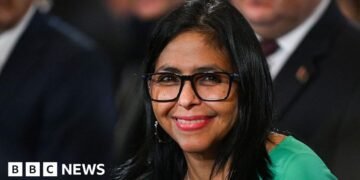























In a dramatic turn of events following the capture of Nicolás Maduro by U.S. forces, Venezuela’s interim president, Delcy Rodríguez, has dismissed General Javier Marcano Tábata, head of the presidential honour guard. This move comes amidst heightened tensions and scrutiny of Venezuela’s political landscape, as the nation grapples with the fallout from Maduro’s arrest and impending trial on serious charges.
Why It Matters
The ousting of a key military figure signals potential shifts in Venezuela’s power dynamics as the interim government seeks to navigate its relationship with the U.S. The incident underscores the precarious situation in which the Venezuelan leadership now finds itself, balancing internal loyalty with external pressures, particularly amidst allegations of narco-terrorism and inviting international cooperation.
Key Developments
- General Javier Marcano Tábata was removed from his position following the U.S. raid that resulted in Maduro’s detention.
- Delcy Rodríguez, appointed as interim president by the National Assembly, has taken a defiant yet conciliatory stance toward the U.S.
- U.S. President Donald Trump threatened repercussions for Rodríguez should she fail to comply with U.S. demands regarding Venezuela’s oil reserves.
- The dismissal is seen as an effort by Rodríguez to establish a trusted circle around her amidst threats of further U.S. military action.
Full Report
General Javier Marcano Tábata’s removal comes only days after Maduro was captured in a U.S. operation in Caracas aimed at addressing serious accusations against him. While the Venezuelan government has not disclosed specific casualty figures, the presidential honour guard appears to have sustained significant losses during the operation. Rodríguez, who has been a close ally of Maduro and served as his vice president, is now tasked with steering the country through a turbulent transition.
In the wake of Marcano Tábata’s dismissal, Rodríguez appointed Gustavo González López, who previously led Venezuela’s national intelligence service. This agency, known for its involvement in repression, faces similar human rights violation allegations as the dismissed general’s former unit, indicating continuity in the existing power structure even as changes are made.
The fallout from Maduro’s arrest has reverberated through Venezuela’s military, with reports indicating that a number of its members, including high-ranking officials, are among those killed during the U.S. intervention. This situation has since raised concerns among supporters of the government, some of whom expressed feeling humiliated by the perceived ease with which U.S. forces overtook Venezuelan defenses.
Rodríguez’s approach towards the U.S. has fluctuated, with her labeling Maduro’s apprehension as an “illegal kidnapping” while also suggesting a willingness to cooperate with the new U.S. administration. Her subsequent actions will be closely monitored both domestically and internationally for signs of how she might steer Venezuela away from further turmoil.
Context & Previous Events
The situation in Venezuela has escalated significantly over recent years, with the U.S. government accusing individuals within its leadership, including Diosdado Cabello, of involvement in drug trafficking and narco-terrorism. The U.S. has placed substantial financial rewards on information leading to their capture. Past investigations have revealed extensive human rights violations linked to Venezuela’s military and intelligence units, creating a complex backdrop to the current political upheaval.