






















U.S. Conducts Strikes in Venezuela; Maduro Reportedly Captured
The United States executed a significant military operation in Venezuela early Saturday, resulting in the reported capture of President Nicolás Maduro. This unprecedented strike, announced by President Donald Trump, escalated tensions in a country already grappling with ongoing political and economic turmoil.
Why It Matters
This military action represents a drastic shift in U.S.-Venezuela relations and raises questions about international law and the implications of unilateral military operations. The strike comes amid months of intensified pressure from the U.S. on Maduro’s regime, known for severe human rights violations and alleged drug trafficking activities.
Key Developments
- Early Saturday, multiple explosions were reported in Caracas, coinciding with low-flying aircraft over the city.
- Trump announced on social media that Maduro and his wife had been captured and taken out of Venezuela.
- Venezuelan authorities condemned the actions as an "imperialist attack," calling for public mobilization.
- The country’s vice president, Delcy Rodríguez, stated she did not know Maduro’s location and demanded "proof of life."
- The U.S. Federal Aviation Administration issued a ban on commercial flights in Venezuelan airspace due to military activity.
- The legality of the U.S. strikes is being questioned by various lawmakers, with no congressional authorization cited for the military actions.
Full Report
The Attack
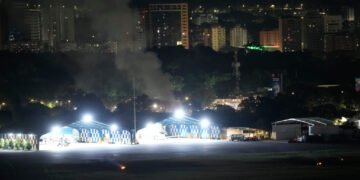
In the early hours of January 3, 2026, at least seven explosions rocked Caracas, sending residents into the streets. Eyewitnesses described a chaotic scene as smoke billowed from military bases, with some residents reporting that "the whole ground shook." According to Trump, the operation involved U.S. law enforcement and was considered successful.
Government Response
Venezuela’s government swiftly condemned the operation. It labeled the attack as an imperialist aggression and called on citizens to mobilize against foreign intervention. A statement from Rodríguez indicated a plan to activate national defense protocols in response to the attack, declaring a state of emergency that allows for the suspension of rights and expanded military authority.
Congressional and International Reactions
There has been no immediate response from the Pentagon or U.S. Southern Command following the attack. Lawmakers have expressed concerns regarding the constitutional legitimacy of the military action without a declaration of war. In international responses, Cuba condemned the operation, and Argentine President Javier Milei praised the news of Maduro’s capture.
Casualty Reports
As of now, it remains unclear if there were any casualties resulting from the operation. The attack lasted less than half an hour, and the extent of the damage to civilian and military infrastructure is still being assessed.
Context & Previous Events
The U.S. has increased its military presence and activities aimed at countering Venezuelan drug trafficking since September 2025. Last week, the CIA was reportedly involved in a drone strike targeting locations linked to drug operations. Maduro has been indicted on charges related to narco-terrorism in a U.S. court, heightening tensions and justifying U.S. military efforts according to the Trump administration.
The situation represents a critical juncture in U.S.-Venezuelan relations, with global implications for diplomatic engagement in the region.






