






















US Launches Major Strikes Against Venezuela, Capturing Maduro
The United States has executed significant military strikes targeting Venezuela, resulting in the capture of President Nicolás Maduro and his wife, Cilia Flores. The operation marks a severe escalation in the ongoing tensions between the two nations and follows a period of increased American military presence in the region.
Why It Matters
This military action is unprecedented in the U.S.-Venezuelan relationship, significantly shifting the political landscape. The situation raises questions about international implications, potential repercussions in Latin America, and the future governance of Venezuela as it faces acute internal conflict and international scrutiny.
Key Developments
- Early Saturday, explosions were reported in Caracas, with low-flying aircraft observed over the city.
- The strikes lasted approximately 30 minutes and also impacted the states of Miranda, Aragua, and La Guaira.
- The Federal Aviation Administration (FAA) has restricted U.S. flights over Venezuela, citing safety concerns related to ongoing military operations.
- Former President Donald Trump claimed on social media that the operation was executed in collaboration with U.S. law enforcement, alleging that Maduro was captured while asleep at his residence within a military base.
- The Venezuelan government declared a national emergency in response, accusing the U.S. of imperialistic aggression.
- Attorney General Pam Bondi announced that Maduro and Flores would face charges in New York, including narco-terrorism and conspiracy-related offenses.
Full Report
Explosions in Caracas
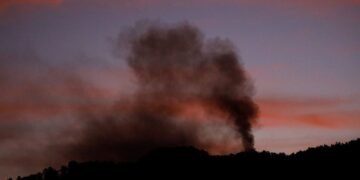
In the early hours of Saturday morning, residents of Caracas experienced a series of explosions, leading many to flee their homes in panic. Smoke was reported rising from a military base in the capital, raising alarms about the unfolding situation. The Venezuelan government confirmed that the strikes extended beyond Caracas, affecting rural states such as Miranda and Aragua.
Capture of Maduro
Former President Trump reported on his social media platform that Maduro and his wife had been successfully detained during the strikes. Sources confirmed that elite U.S. special forces were involved in the operation and detained Maduro while he and his wife were asleep. Venezuelan officials condemned the action, describing it as a "kidnapping" of their president.
Venezuelan Government’s Response
Following the attacks, the Venezuelan administration declared a national emergency. Officials criticized the U.S. for trying to undermine the nation’s autonomy and seize its valuable resources. The statement emphasized the need for national mobilization against what they termed "imperialist aggression," warning of severe threats to international peace and stability.
Implications of Increased Military Action
The strikes follow an escalation in U.S. pressure on the Maduro regime, which has faced allegations of narcotics trafficking and human rights abuses. Maduro, charged with multiple offenses in the U.S., including narco-terrorism, has been accused of failing to assist in combating drug trafficking. Attorney General Bondi noted that Maduro will soon contend with American justice and be held accountable in U.S. courts.
Context & Previous Events
The tensions between the U.S. and Venezuela escalated after the Trump administration accused Maduro’s government of being uncooperative with anti-drug efforts. In 2020, Maduro was charged with narco-terrorism, among other serious offenses. Prior to the strikes, a CIA drone attack had already targeted a Venezuelan docking area associated with drug trafficking organizations, marking a significant shift in U.S. military engagement within Venezuela.
The unfolding events represent a pivotal moment that could redefine Venezuela’s future and its relations with other countries in the region as international observers watch closely.