






















U.S. Orders Icebreakers from Finland Amid Growing Arctic Concerns
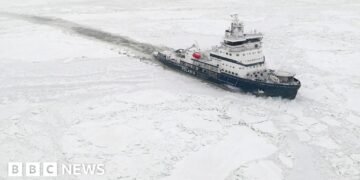
The U.S. government’s renewed focus on Arctic capabilities has led to a significant acquisition of icebreakers from Finland, a country recognized as the global leader in icebreaker design and construction. This move comes as President Donald Trump has cited national security concerns, particularly regarding increasing competition from Russia and China in the region.
Why It Matters
As climate change alters the navigability of Arctic waters, the demand for icebreakers has surged. These vessels are essential for maintaining safe shipping routes and supporting economic activities in ice-covered regions. The U.S. effort to bolster its icebreaker fleet reflects an awareness of shifting geopolitical dynamics and the need for robust Arctic presence.
Key Developments
- The U.S. plans to purchase 11 icebreakers of Finnish design.
- Four of these vessels will be built in Finland, while the remaining seven are set for construction in Louisiana.
- The first contract awarded on December 29 includes two icebreakers from Rauma Marine Constructions, with the first delivery expected in 2028.
- U.S. icebreakers will incorporate designs and expertise from Aker Arctic Technology of Finland.
- Current U.S. capabilities include only three operational icebreakers, compared to Russia’s approximately 40, including eight that are nuclear-powered.
Full Report
U.S. Acquisition of Finnish Icebreakers
Amid heightened Arctic activity, President Trump announced plans for the U.S. to acquire four icebreakers from Finland, signaling an urgent response to the evolving landscape of Arctic navigation and security. The decision underscores the importance of maintaining operational capabilities in ice-clad seas, particularly as commercial trade routes between Asia and Europe become more accessible due to climate change.
The U.S. Coast Guard has placed an order for these vessels to ensure that U.S. shipping interests are protected and that the country maintains a presence in the increasingly strategic Arctic region. According to Trump, "We’re buying the finest icebreakers in the world," emphasizing Finland’s prowess in this domain.
Expertise at Aker Arctic Technology
Located in Helsinki, Aker Arctic Technology’s facility specializes in testing and designing icebreakers. Current projects aim to enhance the structural integrity and engine power of these vessels. Ice performance engineer Riikka Matala outlined the importance of a hull design that effectively breaks ice by bending it rather than simply cutting through it.
Arctic Geopolitics and U.S. Strategy
The U.S. order for these vessels is not merely logistical; it’s rooted in national security. Under U.S. law, naval and Coast Guard vessels must typically be built domestically; however, the President waived this requirement, citing concerns over "aggressive military posturing" by foreign adversaries. The Arctic Ocean has seen increased activity, with Russia and China expanding their fleets and engaging in commercial resource exploration.
Retired U.S. Navy officer Peter Rybski warned that the abrupt increase in maritime traffic necessitates a robust response from the U.S. to maintain its interests. Meanwhile, researchers like Lin Mortensgaard argue that icebreakers symbolize power in Arctic diplomacy, reinforcing a nation’s status as an Arctic state.
Finnish Shipbuilding Capacity
At the same time, Finnish shipyards are preparing to meet this demand. With advanced production techniques honed over more than a century, Finland’s capability to swiftly build complex vessels will facilitate the U.S.’s effort to expand its fleet. Current projects include icebreakers designed for various applications and the continuing goal to enhance Arctic presence.
Context & Previous Events
Finland’s extensive experience in icebreaker design is a product of necessity; nearly all of its harbors face freezing conditions during winter, making icebreakers crucial for maintaining supply routes. The U.S. decision to acquire from Finland exemplifies a growing recognition of the technological leadership Finland holds in this field, with Finnish companies responsible for the design of 80% of operational icebreakers worldwide.
As the Arctic becomes more pivotal to global trade and security, the U.S. aims to enhance its operational capabilities to face the challenges presented by climate change and geopolitical competition.