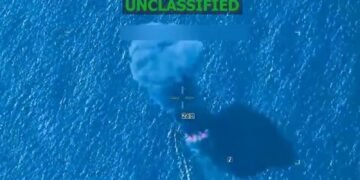























Eight Killed in US Strikes on Alleged Drug Trafficking Vessels in Pacific
The U.S. military has conducted airstrikes on three boats in the Pacific Ocean, resulting in the deaths of eight individuals accused of drug trafficking. This operation highlights ongoing military efforts under the Trump administration aimed at combating narcotics smuggling in international waters.
Why It Matters
This development underscores the escalating measures taken by the U.S. to confront drug cartels, particularly as the nation grapples with the devastating impact of drug abuse and trafficking. The strikes also reflect heightened military engagement in regions historically plagued by smuggling routes, raising essential questions about the strategy and efficacy of such operations.
Key Developments
- The U.S. Southern Command reports that three “narco-terrorists” died in the first boat, followed by two in the second and three in the third vessel.
- No concrete evidence linking the vessels to drug trafficking has been published, though a video of the strikes surfaced on social media.
- Defense Secretary Pete Hegseth ordered the strikes based on intelligence suggesting involvement in known trafficking routes.
- This operation is part of a broader military buildup in the southern Caribbean aimed at diminishing drug cartels’ influence.
- Over the past four months, U.S. military actions have targeted 23 vessels, resulting in the deaths of 87 individuals.
Full Report
Details of the Strikes
The recent airstrikes were aimed at vessels identified as engaging in drug smuggling. The military claimed that these operations were necessary to target designated terrorist organizations, although the evidence for such claims has not been shared publicly. The strikes specifically targeted three boats, resulting in fatalities among individuals labeled as narco-terrorists.
Political Implications
The strikes come amid a growing narrative within the Trump administration’s campaign against drug trafficking. An executive order recently signed by Trump labeled fentanyl as a “weapon of mass destruction,” further amplifying the administration’s commitment to drug interdiction. This order instructs federal agencies to pursue sanctions and financial actions against entities involved in trafficking.
Responses and Future Briefings
The operations have sparked reactions from various stakeholders, including criticisms from the Venezuelan government, which described the seizure of a tanker as “international piracy.” On Capitol Hill, top national security officials, including Secretary Hegseth and others, are set to brief members of Congress amid rising inquiries concerning the military’s ongoing actions.
Context & Previous Events
Earlier this month, the U.S. military seized a crude oil tanker known as Skipper near Venezuela, further illustrating the expanding military focus in the region under the auspices of combating drug trafficking. The Trump administration has conducted a series of strikes against vessels, most notably in the Caribbean, as part of its broader strategy to tackle narcotics smuggling.