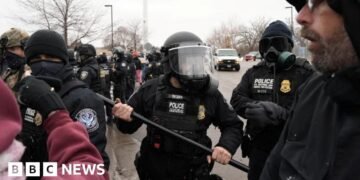























Tensions Rise in Minneapolis as Federal Inquiry Targets State Officials Over Immigration Actions
The U.S. Justice Department has launched an investigation into Minnesota Governor Tim Walz and Minneapolis Mayor Jacob Frey, examining their alleged efforts to obstruct federal immigration officials. This inquiry follows the controversial shooting of a local woman, Renee Good, by an ICE agent, which has sparked widespread protests and heightened scrutiny on federal immigration practices.
Why It Matters
The clash between state officials and federal immigration agents underscores a growing divide over immigration enforcement in the U.S. As protests erupt in Minneapolis, the inquiry raises critical questions about the balance of power between local and federal authorities, especially in a politically charged environment. With tensions running high, the outcome could influence future policy and operations related to immigration enforcement nationwide.
Key Developments
- Investigative Focus: Governor Walz and Mayor Frey are under investigation for allegedly conspiring to impede federal officers in their official duties.
- Shooting Incident: Renee Good was shot multiple times by an ICE agent, fueling protests and calls for transparency in the investigation.
- Federal Response: The Justice Department has issued subpoenas to both officials, citing a federal statute regarding interference with federal officers.
- Political Reactions: Both state leaders have criticized the federal response, with Walz calling the inquiry an authoritarian tactic and insisting on the need for peaceful protests.
- Continued Protests: Demonstrations in Minneapolis are ongoing, reflecting community anger over Good’s death and broader immigration enforcement issues.
Full Report
Examination of Officials
The Justice Department’s inquiry into Governor Walz and Mayor Frey appears to be a response to statements made regarding Immigration and Customs Enforcement (ICE) operations in Minneapolis. Both officials have openly challenged the presence and tactics of ICE in the city, with Frey demanding their withdrawal. The investigation revolves around accusations that state leaders may have tried to obstruct federal agents performing their duties.
The Shooting of Renee Good
Renee Good, a 37-year-old legal observer, was shot by an ICE agent in an incident that has drawn national attention. Reports indicate that Good was struck multiple times, with conflicting narratives emerging about the circumstances leading to the shooting. Federal authorities claim she posed a threat by allegedly attempting to run over an agent, while local officials maintain that she was in no danger and posed no threat to law enforcement.
Political Fallout
The political implications of the ongoing investigation are significant. Governor Walz condemned the inquiry on social media, suggesting it is an attempt to misuse the justice system against political adversaries. Meanwhile, President Trump has criticized local leaders and protesters, suggesting unrest is being fueled by "paid professionals" and asserting that state governance is inadequate.
Local Legislative Actions
In the wake of these events, Minnesota Democratic lawmakers conducted press conferences, voicing their opposition to the tactics used by ICE. Prominent officials like Congresswoman Ilhan Omar and Representative Pramila Jayapal have labeled federal immigration strategies as reckless, calling for more accountability and oversight on federal agents.
Context & Previous Events
The conflict between state and federal officials over immigration enforcement has been escalating during the Trump administration, particularly amid a backdrop of high-profile cases involving ICE operations. The investigation into Walz and Frey further illustrates the contentious relationship between local authorities and federal immigration agencies, particularly in areas with significant immigrant populations and active opposition to federal enforcement practices.
As the situation in Minneapolis develops, the investigation and its implications for local governance and immigration policy remain crucial points of concern for both state and federal stakeholders.