






















Federal Judge Orders Curb on ICE Tactics Against Peaceful Protesters in Minneapolis
A federal judge has mandated a halt to certain aggressive tactics employed by Immigration and Customs Enforcement (ICE) agents against peaceful demonstrators in Minneapolis. This ruling follows a weeks-long surge in federal immigration enforcement under President Donald Trump’s administration, which has seen the deployment of thousands of federal officers and significant arrests in the area.
The decision comes in the wake of mounting protests triggered by the fatal shooting of a mother of three by an ICE agent earlier this year. These protests reflect broader tensions surrounding immigration enforcement and community safety.
Why It Matters
The ruling is significant as it underscores the judiciary’s role in protecting constitutional rights amid escalating federal actions against local populations. Additionally, it raises questions about the limits of federal authority in managing immigration enforcement, particularly in contexts of local dissent. The outcome may also influence future interactions between state and federal government officials.
Key Developments
- A federal judge in Minnesota, Kate Menendez, has issued an injunction against ICE, limiting its capacity to retaliate against individuals engaged in peaceful protest.
- The ruling arose from a lawsuit filed by six protesters who claimed their constitutional rights had been violated by ICE actions.
- The Minnesota governor, Tim Walz, and Minneapolis mayor, Jacob Frey, are under investigation for allegedly conspiring to obstruct federal immigration enforcement efforts.
- The Justice Department is examining statements from Walz and Frey that might have hindered ICE operations.
- Mayor Frey expressed his determination to protect the city from perceived intimidation, while Governor Walz condemned the investigation as a misuse of power.
Full Report
Court Ruling on ICE Actions
U.S. District Judge Kate Menendez’s injunction specifically bars federal agents from engaging in retaliatory actions against individuals participating in non-violent, unobstructive protests. This decision aims to protect the rights of demonstrators who have been vocal against ICE’s practices, especially since the death of Renee Nicole Good, a 37-year-old mother shot by an ICE agent in January.
Investigation into State Officials
Amid the ongoing tensions, Governor Walz and Mayor Frey are reportedly facing a probe by the Justice Department. Authorities are scrutinizing the officials for potential conspiracy to obstruct federal agents in their immigration enforcement duties. Both leaders have publicly dismissed the allegations, positioning the investigation as an act of intimidation and misuse of the judicial system.
Responses from Local Officials
In a statement reacting to the investigation, Mayor Frey declared his commitment to protect Minneapolis residents, asserting that he would not yield to federal pressure. Governor Walz echoed these sentiments, labeling the actions against them as authoritarian tactics employing the justice system for intimidation. The pushback from local officials highlights a growing conflict between federal immigration policy and local governance.
Context & Previous Events
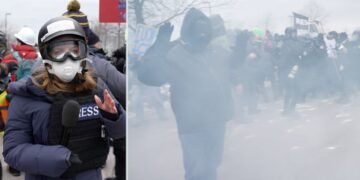
The recent developments in Minneapolis are set against a backdrop of intensified protests against ICE’s operations, particularly following the shooting death of Renee Nicole Good earlier this year. The subsequent protests have sparked broader public outcry against the federal agency’s methods, including the use of tear gas and arrests against demonstrators.
With federal agents increasingly active in the region, more than 2,500 arrests have transpired during this enforcement period, further complicating the community’s relationship with immigration authorities and raising questions about civil liberties and public safety.






