






















U.S. Seizes Two Tankers Linked to Venezuelan Oil Exports
The United States has conducted back-to-back operations to seize two tankers tied to Venezuelan oil exports, significantly ramping up its efforts to curtail oil trade from the South American nation. These actions come amid ongoing tensions between the U.S. and Venezuela, particularly following the reported capture of President Nicolás Maduro by U.S. special forces in Caracas.
Why It Matters
These operations underscore the U.S. government’s determination to enforce sanctions against Venezuelan oil exports, which have continued despite extensive international restrictions. As Venezuela grapples with economic turmoil, the U.S. aims to leverage these seizures to pressure the Maduro regime while potentially redirecting oil revenues to benefit the Venezuelan populace. Russia’s involvement and condemnation add further complexity to an already strained geopolitical relationship.
Key Developments
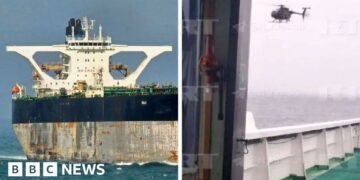
- U.S. forces boarded the Russian-flagged tanker Marinera after a nearly two-week pursuit in the North Atlantic.
- The second tanker, M/T Sophia, was intercepted in the Caribbean, accused of conducting illegal activities.
- The British Navy provided logistical support in the operations targeting the Marinera.
- U.S. Defense Secretary Pete Hegseth confirmed the continuation of efforts to curb Venezuelan oil exports through a post on social media.
- Russia condemned the seizure of the Marinera and demanded humane treatment for its crew.
- Secretary of State Marco Rubio announced Venezuela’s cooperation in the matter, indicating a shift in its oil export strategy.
- The U.S. President indicated that Venezuela might hand over 50 million barrels of oil worth approximately $2.8 billion to the U.S.
Full Report
Operations Conducted
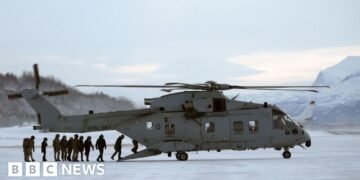
U.S. military forces boarded the Marinera after tracking the vessel, which was sailing under a Russian flag, in the waters between Iceland and Scotland. The operation involved the U.S. Coast Guard Cutter Munro and received air and sea support from the British Navy. The M/T Sophia was intercepted in the Caribbean and accused of engaging in illicit activities, with U.S. Coast Guard personnel escorting it to the U.S. for necessary actions.
Official Statements and Reactions
Defense Secretary Pete Hegseth stated on social media that the blockade against sanctioned Venezuelan oil remains fully in effect worldwide. The White House characterized the Marinera as a “stateless vessel” that had previously flown a false flag. It also mentioned that a judicial order was in place prior to its seizure.
The Russian government voiced strong disapproval of the seizure, emphasizing that the ship was properly registered and should not have been boarded by U.S. forces. Furthermore, Russia asserted that it had granted temporary permission for the ship to fly its flag and reminded the U.S. of the international laws governing such actions.
U.S. Strategy Moving Forward
Secretary of State Marco Rubio stated that Venezuela’s leadership has begun cooperating with the U.S., acknowledging that this collaboration is vital for avoiding economic collapse through the trading of oil. Rubio detailed that the U.S. plans to sell oil sourced from Venezuela on the global market and manage the proceeds in a way that would ultimately benefit the Venezuelan people.
Context & Previous Events
The recent operations take place shortly after the U.S. special forces reportedly captured President Nicolás Maduro in a swift raid at his residence in Caracas. The U.S. has been pursuing sanctions against Venezuela, particularly its oil exports, for some time, viewing these actions as critical to stabilizing the region and curtailing illicit trade practices. China, a major buyer of Venezuelan oil in recent years, has criticized the U.S. operations, claiming they threaten global energy security.