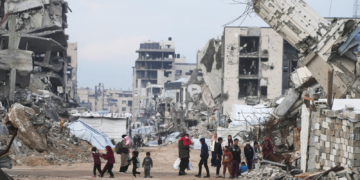























Trump’s Envoy Unveils Second Phase of Gaza Conflict Resolution Plan
Donald Trump’s special envoy, Steve Witkoff, has launched the second phase of a plan aimed at resolving the ongoing conflict in Gaza, which includes disarming Hamas and rebuilding the war-torn region. This effort comes after a ceasefire agreement, reached following two years of hostilities, and signifies a critical step towards establishing a stable governance structure in the territory.
Why It Matters
The success of this initiative is pivotal not only for the future of Gaza but also for regional stability and U.S. foreign policy in the Middle East. With ongoing violence and humanitarian crises, the actions taken in the coming days and months will have far-reaching implications for Israeli-Palestinian relations and international diplomatic efforts.
Key Developments
- Launch of NCAG: The National Committee for the Administration of Gaza (NCAG) has been established as a transitional body to oversee daily governance under U.S. supervision.
- International Oversight: The NCAG will be supervised by a "Board of Peace," led by Donald Trump, with former Bulgarian diplomat Nickolay Mladenov appointed as director-general.
- Palestinian Support: Initial reports indicate that Palestinian leaders are endorsing the transition to phase two.
- Challenges Ahead: The disarmament of Hamas is a significant hurdle, as the group has not yet complied with previous demands.
- Reconstruction Costs: The UN estimates that rebuilding Gaza will require over $50 billion, a considerable financial burden that has yet to attract sufficient pledges.
Full Report
Overview of Phase Two
In his recent announcement, Witkoff detailed the objectives of phase two, which include disarming Hamas, initiating a large-scale reconstruction effort, and establishing a governance framework through the NCAG. This move follows a ceasefire secured through U.S. mediation, marking a transition toward an administration that can manage Gaza’s affairs alongside international support.
International and Domestic Reactions
The setup of the NCAG has been met with approval by mediators Egypt, Turkey, and Qatar, who are keen to see stability restored in the region. Witkoff has publicly stated expectations for Hamas to adhere to their commitments, including recovering the remains of a final Israeli hostage. The consequences of failing to comply have been emphasized, indicating potential repercussions for the group.
Sky News correspondents highlight the complexity of the situation, suggesting that the disarmament of Hamas presents a formidable challenge. The prospect of a military peacekeeping force remains vague, with no clear details on potential contributors.
Israeli Position
Israeli Prime Minister Benjamin Netanyahu has expressed cautious support for the plan while underscoring that Israel will not withdraw from Gaza without evidence of Hamas disarmament. This stance reflects ongoing tensions and highlights the challenges of achieving the goals set forth in the ceasefire agreement.
Context & Previous Events
The ceasefire, part of Donald Trump’s 20-point plan, became effective in October, significantly reducing hostilities. However, the path to peace has been fraught with difficulties, including continuing airstrikes that have claimed numerous lives and highlighted failures in returning the last Israeli hostage. Both sides have accused each other of violating the terms of the deal, emphasizing the fragile nature of the current ceasefire.
Efforts to launch this second phase of negotiations signal a determined push to stabilize Gaza amidst ongoing conflict, with significant economic resources needed for reconstruction. As the situation evolves, the international community watches closely to see if these initiatives will yield lasting peace.