






















U.S. Military Successfully Executes Operation to Capture Nicolás Maduro
The U.S. military launched a meticulously coordinated operation that resulted in the capture of Venezuelan President Nicolás Maduro. Known as "Operation Absolute Resolve," the mission involved over 150 aircraft and was a culmination of advanced planning and intelligence collaboration.
Why It Matters
This capture marks a pivotal moment in U.S.-Venezuelan relations and raises significant questions about the future of governance in Venezuela. The operation not only showcases the United States’ military capabilities but also raises debates regarding international law and sovereignty.
Key Developments
- Operation Launch: On January 2nd, the operation commenced at 10:46 p.m. Eastern Time following a series of preparations conducted over several months.
- Coordination: The operation involved 20 different bases and relied heavily on intelligence support from agencies such as the CIA and NSA.
- Execution: U.S. forces successfully infiltrated Caracas, dismantling air defense systems, and apprehended Maduro with no casualties among U.S. personnel.
- Aftermath: Maduro and his wife were taken into custody aboard the USS Iwo Jima, with the extraction force returning safely at 3:29 a.m. Eastern Time.
Full Report
Operation Overview
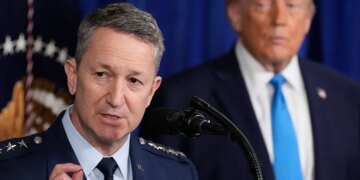
General Dan Caine, Chairman of the Joint Chiefs of Staff, detailed the complexities of Operation Absolute Resolve during a press briefing held at Mar-a-Lago alongside President Donald Trump. He highlighted that the operation required utmost precision and showcased the capabilities of U.S. forces across various military branches.
Mission Composition
The joint task force included advanced aircraft from the Marines, Army, and Air Force, including F-22s and B-1 bombers. Intelligence from multiple agencies played a crucial role, as agencies like Spacecom and Cybercom worked to create an operational pathway into Venezuela.
Approach to Caracas
U.S. helicopters began their approach to Venezuelan shores under the cover of darkness and at low altitudes to evade detection. As the helicopters neared their objective, they faced resistance, leading to engagements that required an immediate and tactical response from U.S. forces.
Capture and Extraction
Upon arriving at Maduro’s compound, the apprehension team moved quickly to isolate the area and arrest Maduro and his wife, who eventually surrendered. Following their capture, the extraction force executed a safe withdrawal, encountering and countering further threats during their exit.
Context & Previous Events
The operation comes amid escalating tensions between the U.S. and Venezuela. Prior instances of U.S. intervention in Latin America often drew scrutiny and condemnation regarding their legality and implications for national sovereignty. Maduro’s regime had been a focal point of international criticism and efforts at diplomatic isolation from the United States and other countries.
This historic operation represents a significant shift in U.S. foreign policy and military engagement in the region, raising questions on whether it establishes a precedent for future interventions.






