
























Federal Investigation Launched Against Federal Reserve Chairman Jerome Powell
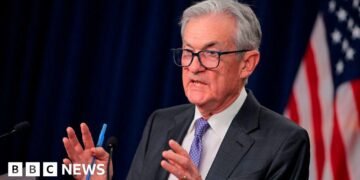
Federal prosecutors have initiated a criminal investigation into Jerome Powell, Chairman of the Federal Reserve, related to his recent testimony before a Senate committee. This unprecedented action raises significant questions about the independence of the Federal Reserve amidst political pressures, particularly from former President Donald Trump.
Why It Matters
The investigation highlights ongoing tensions between the Trump administration and the Federal Reserve, especially regarding interest rate policies. The outcome could set a precedent for how political influence affects the central bank’s ability to operate independently, with implications for economic policy and stability.
Key Developments
- Federal prosecutors have served subpoenas to the Federal Reserve, indicating a potential criminal indictment against Powell.
- Powell described the investigation as “unprecedented” and believes it stems from his refusal to lower interest rates under Trump’s pressure.
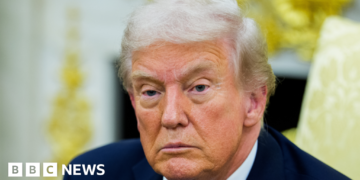
- Trump publicly criticized Powell, stating he was not performing well at the Fed while denying any knowledge of the investigation.
- The Federal Reserve is undertaking extensive renovations of its buildings, which have faced scrutiny over escalating costs.
- North Carolina Senator Thom Tillis has announced he will oppose any Fed nominee from Trump until the investigation is resolved.
- Both Republican and Democrat senators voiced concerns over the implications of the investigation for the Fed’s independence.
- Market reactions included a spike in precious metal prices amid the news of the investigation.
Full Report
Investigation Initiated
On Sunday, Jerome Powell revealed that the U.S. Department of Justice has opened a criminal investigation into his conduct during a recent Senate committee testimony concerning the renovation of Federal Reserve buildings. Powell characterized the inquiry as “unprecedented,” suggesting that it is politically motivated due to his resistance to pressure from former President Trump to cut interest rates. In a video statement, he emphasized that the investigation poses a critical question about the Fed’s ability to base its monetary policy on economic conditions rather than political whims.
Political Pressure and Reactions
In a separate interview, Trump distanced himself from the investigation, claiming to have no knowledge of the details while still criticizing Powell’s performance at the Fed. The former president has long expressed dissatisfaction with Powell’s approach to interest rates, often suggesting that lower rates would stimulate the economy. The renovation project of the Eccles and 1951 Constitution Avenue buildings, the first significant updates since the 1930s, has been a focal point, with Trump denouncing the rising costs associated with the renovations.
Congressional Response
Senator Thom Tillis, a Republican member of the Senate Banking Committee, voiced strong opposition to any Fed nominations put forth by Trump until the legal matters surrounding Powell’s investigation are settled. This sentiment is echoed by Senator Elizabeth Warren, a Democrat, who accused Trump of attempting to undermine the independence of the Federal Reserve to install a less critical chairperson. Both senators underline the significance of safeguarding the breadth of the Fed’s authority against perceived political coercion.
Market Implications
Following the announcement of the investigation, precious metal prices surged, reflecting market anxiety stemming from the potential repercussions of the inquiry on U.S. economic policy. Gold prices rose by 1.4%, while silver initially hit a record high before settling at a notable increase on the day.
Context & Previous Events
This situation unfolds against a backdrop of Trump’s previous conflicts with figures in the financial sector, including his attempts to remove Federal Reserve Board members, alongside ongoing scrutiny regarding political motivations behind judicial actions taken during his administration. In particular, recent unsuccessful attempts to pursue legal actions against former adversaries by the Justice Department highlight the ongoing intersection of politics and legal proceedings in America.