






















U.S. Debt Ceiling Showdown: McCarthy Risks Fallout for House Republicans
A looming debt ceiling dilemma poses significant risks for many Americans as Speaker Kevin McCarthy attempts to secure spending cuts from President Joe Biden. This strategy could lead to gridlock, impacting essential services and endangering the economy if a resolution is not reached.
Why It Matters
The stakes of this negotiation extend beyond partisan politics, potentially affecting government operations and the financial security of millions. The U.S. government must raise its borrowing limit to meet obligations, and failure to do so could trigger severe economic repercussions, including halted Social Security payments and job losses.
Key Developments
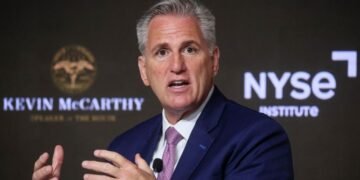
- Kevin McCarthy traveled to Wall Street, asserting that the House GOP will not raise the debt ceiling without substantial spending cuts from Biden.
- McCarthy insists he will not allow the government to default, warning that such an outcome would have disastrous effects.
- Internal divisions within the Republican Party complicate McCarthy’s efforts to present a united front.
- Some Republicans express reluctance to support McCarthy’s initial proposal, highlighting a lack of consensus on specific concessions.
- The White House maintains that a straightforward debt limit increase should occur without bargaining on policy issues.
Full Report
Internal Republican Challenges
Despite McCarthy’s optimism, internal disagreements among House Republicans threaten his approach. In a closed-door meeting, some members of the GOP voiced frustration over insufficient details in the proposed package, with Rep. Scott Perry calling for more drastic budget cuts. Others, like Rep. Tim Burchett, remain noncommittal, underscoring the vulnerability of McCarthy’s leadership amid his slim majority.
Negotiation Landscape
Complicating matters further, some Republican members have staunchly declared they will never vote to raise the debt ceiling, creating added pressure on McCarthy to negotiate effectively. Meanwhile, Democratic leaders have shown little willingness to collaborate on a bill that involves significant spending cuts opposed by President Biden.
Blame Game
To shift the political narrative, McCarthy aims to place the onus for any potential crisis on Biden, characterizing rising national debt as a pressing threat. He argued that the president has failed to address this issue adequately. However, historical precedent suggests such tactics can backfire—previous Republican-led fiscal confrontations have often favorably painted Democratic presidents.
Senate Dynamics
On the Senate front, Republican Leader Mitch McConnell has offered moral support but refrained from direct involvement, indicating a cautious approach among GOP senators as they navigate this political turmoil. Meanwhile, Senate Majority Leader Chuck Schumer emphasized the lack of actionable information stemming from McCarthy’s recent Wall Street visit and warned of an impending default if negotiations do not progress.
Economic Implications
With over $31 trillion in national debt, economists and lawmakers alike question whether Republicans have chosen the right moment for this high-stakes conflict. As adverse economic repercussions loom, voters may have expected compromise rather than confrontation in the current political climate.
Context & Previous Events
Republicans have historically raised the debt ceiling without opposition during times of their party’s presidency, leading to accusations of hypocrisy given their current stance. Both President Trump and past leaders like Reagan advocated for smooth proceedings regarding the debt limit, contrasting sharply with the current Republican-led negotiations. In the face of potential default, the pressure is mounting for McCarthy to reconcile party demands with fiscal responsibility, shaping both his and Biden’s legacies moving forward.