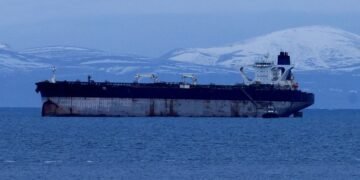























U.S. Coast Guard Removes Venezuelan-linked Oil Tanker Crew from UK Waters
American forces have transferred the captain and first officer of a Venezuelan-linked oil tanker to a U.S. Coast Guard vessel, abandoning their previous legal protections under UK jurisdiction. This development raises significant questions about the management of international maritime law and the implications of coordinated actions between the U.S. and UK authorities.
Why It Matters
The capture of the Russian-flagged Marinera, previously known as Bella 1, underscores mounting tensions surrounding the handling of sanctioned vessels. With rising geopolitical stakes involved in maritime skirmishes, the swift removal of the crew has important legal implications regarding jurisdiction, asylum claims, and mutual legal assistance between nations.
Key Developments
- On January 7, the Marinera was seized off Iceland and relocated to Scotland’s Moray Firth.
- A petition to keep the crew under Scottish jurisdiction was thwarted as they were moved by U.S. authorities.
- The Solicitor General confirmed to the court that the crew had already left UK waters.
- Remaining crew members have been processed and are currently staying at a hotel in Moray.
- No crew members have claimed asylum; some wish to travel to the U.S., while others opt for different destinations.
Full Report
Court Proceedings
Lawyers representing Natia Dzadzama, the captain’s spouse, sought an emergency court order in Edinburgh to prevent the removal of the crew from Scottish jurisdiction. During a late-night hearing, Lord Young initially granted a temporary interdict, halting any movement of the Marinera’s crew. However, this order was rescinded the following day upon confirmation that both the captain and the first officer were no longer in UK waters.
Solicitor General Ruth Charteris KC informed the court that the pair had been transferred aboard the U.S. Coast Guard vessel Munro, effectively leaving UK territorial waters. The court also learned that the remaining 26 crew members had departed the ship and were processed at an army reserve center in Inverness; none had claimed asylum.
Conditions Faced by the Crew
The crew remained temporarily housed in a hotel in Elgin, Moray, with five expressing a desire to travel to the U.S. and 21 others indicating they would prefer destinations elsewhere. Charteris noted that the Scottish authorities never detained the crew, clarifying that the U.S. Department of Justice had requested mutual legal assistance on January 16—events leading to the crew’s processing and eventual release.
Legal Maneuvers
With the withdrawal of the mutual legal assistance request by U.S. authorities, the Solicitor General urged the court to lift the interim interdict, highlighting that it created unnecessary complications for the Scottish ministers as they had no control over the vessel or its crew. Chris Pirie KC, representing the Advocate General, stated that the UK government did not oppose lifting the order, signaling a consensus on the matter.
Despite these developments, Clare Mitchell KC, representing Dzadzama, expressed dissatisfaction, noting that the very concern of keeping the captain and first officer under local authority was rendered moot.
Context & Previous Events
The Marinera was seized by American forces amidst rising tensions tied to sanctions against Venezuelan oil exports. The incident has drawn attention to international protocols involving the detention and legal treatment of foreign nationals in light of complex maritime laws and geopolitical relationships between the U.S. and its allies.
As this situation evolves, it remains to be seen how it might influence future engagements concerning global maritime law and the enforcement of sanctions on various nations.






