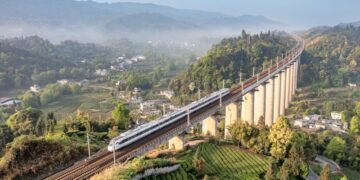























The United States stands at a pivotal moment in the realm of transportation as plans for high-speed rail gain momentum. In stark contrast to countries like China, Japan, and various European nations, which have embraced advanced rail systems for decades, America finds itself lagging behind in this transformative transit option.
The resurgence of interest in high-speed rail comes amid growing frustrations with traffic congestion and an outdated air travel network. The potential benefits—boosting economic opportunities, reducing travel times, and fostering community connections—underscore the urgency for action.
Key Developments
- President Joe Biden’s $1.2 trillion infrastructure bill allocates $170 billion specifically for rail improvements.
- Brightline, a private rail operator, plans to construct a $10 billion high-speed line from Los Angeles to Las Vegas by 2027.
- California’s High-Speed Rail project aims to connect major cities with speeds up to 220 mph, with an anticipated completion around 2030.
- Amtrak is set to introduce new Avelia Liberty trains, designed to enhance travel speeds and economic benefits.
- Only 375 route miles in the U.S. currently support speeds over 100 mph, compared to China’s 26,000 miles of high-speed rail.
Full Report
Current Landscape
Despite being a world leader in economic power, the U.S. has largely neglected high-speed rail, relying instead on congested highways and an often unreliable airline network. This absence has left Americans unfamiliar with the concept of high-speed rail, as they continue to prioritize car and air travel over rail transport.
Government Initiatives
President Biden’s ambitious infrastructure package indicates a newfound focus on rail. The funding aims to repair the crumbling Northeast Corridor, which connects major East Coast cities such as Boston, New York, and Washington, D.C. Additionally, various projects seek to bring passenger trains back to regions that have lacked rail service for decades, underlining the potential for revitalization in passenger rail service.
Private Investments and Future Projects
Brightline’s plans for a high-speed rail line between Los Angeles and Las Vegas demonstrate the private sector’s commitment to rail development. Expected to save travelers significant time, this new route is anticipated to create approximately 35,000 construction jobs. Brightline aims to attract millions of riders, directly challenging the bus and car travel market on that corridor.
California’s High-Speed Rail project is also poised for significant progress. Once completed, it will connect six of the state’s largest cities and dramatically reduce travel times between key regions. Although it has faced challenges over the years, including management issues and funding concerns, the growing emphasis on reducing congestion underscores its importance.
Rail Technology Advancements
Amtrak’s introduction of the Avelia Liberty trains, which are capable of reaching speeds of up to 220 mph, represents a significant step forward for American rail technology. These trains are designed to improve operational efficiency and stimulate local economies, reflecting efforts to embrace high-speed rail capabilities.
Economic Impact
Beyond transportation efficiency, rail development could significantly enhance economic opportunities. Projects like the Avelia Liberty initiative are driving local job creation. For example, the city of Hornell, New York, has witnessed substantial economic investment due to rail initiatives, resulting in job growth and infrastructure improvements.
Challenges Ahead
Experts warn that despite increasing enthusiasm, hurdles remain for the establishment of a comprehensive high-speed rail network. A lack of sustained political support and public awareness may impede progress. Additionally, opposition from landowners could complicate future developments.
Context & Previous Events
The U.S. has historically favored automobile and air travel since the 1950s, leading to the decline of the passenger rail system that was once a vital mode of transportation. Railroads like the New York Central fell into decline, passing their services to Amtrak, which was created in 1971 to maintain passenger operations. Over the decades, federal support for rail has waned, overshadowed by the lobbying of the car and airline industries.