






















Crisis Averted: NATO and U.S. Reach Tentative Agreement on Greenland
In a tumultuous fortnight marked by escalating tensions, U.S. President Donald Trump has tempered his aggressive posturing over Greenland, following diplomatic discussions with key allies. The situation escalated after a U.S. military operation in Venezuela, leading to rhetoric that included claims of ownership and threats against NATO partners. However, recent talks suggest a pathway towards more constructive engagement around Greenland’s international status.
Why It Matters
The implications of this diplomatic maneuver are significant not only for U.S.-Denmark relations but also for NATO’s cohesion in the face of rising global tensions. The prospect of an increased military presence in Greenland poses questions about security and sovereignty that resonate throughout the Arctic and beyond, especially regarding the influence of Russia and China.
Key Developments
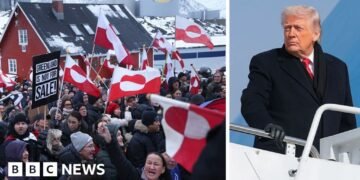
- Trump’s remarks on Greenland sparked protests outside the U.S. consulate in Nuuk, Greenland.
- NATO Secretary General Mark Rutte played a crucial role in diffusing heightened tensions with the U.S. administration.
- A working group was established following talks between Denmark, Greenland, and U.S. officials to discuss future arrangements concerning Greenland.
- Discussions reportedly include the possibility of Denmark ceding some jurisdiction for U.S. military bases, echoing arrangements seen in Cyprus.
- NATO aims for enhanced security cooperation among Arctic allies to deter Russian and Chinese advancement in the region.
Full Report
Diplomatic Discussions
Intensified rhetoric from the Trump administration regarding Greenland was sparked by recent military successes in Venezuela. Trump engaged in claims of ownership, which raised alarms among NATO allies and led to protests in Greenland’s capital. The discourse prompted urgent diplomatic measures to stabilize the situation.
NATO Secretary General Mark Rutte facilitated direct talks between Denmark and Greenland during a recent visit to the U.S., where the groundwork was laid for the establishment of a "working group." This initiative is designed to create a framework for discussing Greenland’s international status and military presence in the region.
Potential Agreements
According to unofficial reports, negotiations may include provisions for Denmark to transfer minor areas of sovereignty in Greenland for U.S. military base developments. While this arrangement is reminiscent of existing agreements in Cyprus, it has not yet been confirmed by either Denmark or NATO.
Trump mentioned the prospective deal could involve US access to Greenland’s mineral resources, a contentious subject that has yet to be clarified by officials. NATO has indicated that discussions will focus on enhancing Arctic security and preventing foreign influences from undermining regional stability.
Reactions
The recent developments have drawn reactions from global leaders. Canada’s Prime Minister Mark Carney referred to the situation as a "rupture," indicating a shift in the established geopolitical order. EU Commission President Ursula von der Leyen emphasized the need for greater European independence in light of these changes, suggesting that the alliance faces a fundamental transformation.
Context & Previous Events
Prior to this crisis, Denmark had expressed its openness to increased U.S. military presence in Greenland. The evolving conversation about Greenland’s geopolitical significance is rooted in broader concerns over Arctic security, particularly in light of Russia’s and China’s interests in the region.