






















Nicolás Maduro Captured in Elaborate U.S. Operation
A dramatic military operation has led to the capture of Venezuelan leader Nicolás Maduro, marking a significant turn in U.S.-Venezuela relations and raising urgent questions about future implications. This mission reflects what U.S. officials describe as an unprecedented level of intelligence and resource coordination.
Why It Matters
The apprehension of Maduro represents a critical moment in ongoing tensions between the U.S. and Venezuela. The operation, characterized by its speed and precision, showcases advancements in U.S. military and intelligence capabilities, while also revealing complexities in Venezuelan internal politics and security. Analysts are now evaluating the potential ramifications for the regional balance of power.
Key Developments
- The operation was months in the making, involving undercover CIA operatives in Venezuela.
- A crucial source close to Maduro provided intelligence about his movements and locations.
- The operation included around 150 aircraft and sophisticated technology to ensure stealth and effectiveness.
- U.S. forces confronted Cuban bodyguards during the mission, raising questions about potential regime complicity.
- A classified CIA assessment indicated that engaging with elements of the current regime was preferred for stability.
Full Report
The Intelligence Gathering
The mission to capture Maduro was meticulously orchestrated over several months, with CIA operatives covertly deployed to Venezuela in August, operating without diplomatic cover due to the absence of a U.S. embassy. These operatives conducted reconnaissance and cultivated sources to inform the operation. One particularly crucial source, reportedly within Maduro’s inner circle, provided vital intelligence that led to the success of the operation.
The Mission’s Execution
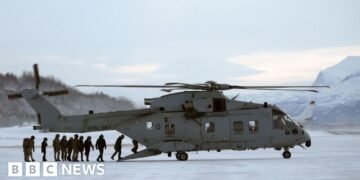
On the day of the operation, U.S. forces executed a well-coordinated plan involving approximately 150 aircraft. Helicopters navigated terrain at low altitudes to reach Maduro’s heavily guarded compound. The operation’s success is attributed not only to military tactics but also to the accuracy of the intelligence gathered. U.S. President Donald Trump noted that the lights in Caracas were turned off, likely due to cyber operations that facilitated the special forces’ approach without detection.
The Battle Dynamics
Reports indicate the operation encountered minimal resistance and was executed with remarkable efficiency. Despite a helicopter being struck, no U.S. personnel were lost. It remains unclear how effective Maduro’s security team was, as U.S. forces managed to corner him as he attempted to secure himself in a safe room. Cuban officials reported casualties among their nationals, who were providing protective services to Maduro, raising further questions about the regime’s internal dynamics.
Strategic Implications
The CIA reportedly evaluated various scenarios should Maduro be removed, ultimately favoring collaboration with existing regime elements over a potential power vacuum. Back-channel communications likely occurred in preparation for the operation, suggesting a calculated approach that could lead to greater stability in Venezuela. The specifics of these interactions remain undisclosed.
Context & Previous Events
The U.S. has long been critical of Maduro’s leadership amidst economic turmoil and accusations of human rights violations in Venezuela. Previous efforts to destabilize his government have met with varying degrees of success, but the scale and precision of this operation have set a new precedent in U.S.-Venezuelan relations.