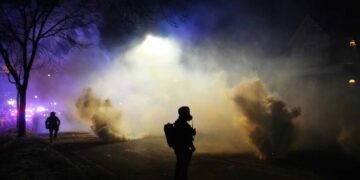























Trump Threatens to Invoke Insurrection Act Amid Protests in Minnesota
In a significant escalation of tensions in Minnesota, President Trump has threatened to invoke the Insurrection Act to quell protests following the fatal shooting of a local woman by an ICE agent. The unrest, which has spread nationwide, began after the death of Renee Macklin Good and escalated with another shooting incident involving ICE agents.
This development is critical as it highlights the ongoing conflict between federal immigration enforcement and widespread public dissent, raising questions about law enforcement’s role and the potential military response to civil unrest.
Key Developments
- Trump stated he would invoke the Insurrection Act if Minnesota officials do not control the protests.
- Protests erupted following the shooting of Renee Macklin Good by an ICE agent and continued after another shooting incident during an attempted arrest.
- The Insurrection Act allows the president to deploy military forces for law enforcement, differentiating it from previous National Guard mobilizations.
- Historically, the Insurrection Act has rarely been invoked, with only 30 instances since its inception in 1807.
- Legal scholars express concern that invoking the act for law enforcement purposes could lead to significant legal challenges.
Full Report
Trump’s Warning
On Thursday, President Trump took to Truth Social to express his frustration with Minnesota’s handling of protests, stating that he would utilize the Insurrection Act if local politicians fail to address what he termed “professional agitators” opposing the Homeland Security agents. This would allow him to deploy military forces to restore order, a move that some of his aides have suggested might expand military involvement in immigration enforcement and public safety.
Details of Recent Events
Protests ignited after the fatal shooting of Renee Macklin Good, a 37-year-old Minneapolis resident, by an ICE agent, triggering nationwide demonstrations against the agency’s presence. Tensions flared further after another ICE-related incident where agents shot a Venezuelan immigrant in the leg during an arrest attempt, fueling further outrage among demonstrators.
Legal and Historical Context
The Insurrection Act allows for military intervention under several circumstances, including when a state cannot enforce the law due to “unlawful obstructions” or when the president believes federal laws are being obstructed. Notably, before invoking the act, the president must first direct any insurgents to disperse, adding a layer of procedural integrity to its use.
Unlike past deployments of the National Guard under Title 10, which often restrict military personnel from acting in law enforcement capacities, invoking the Insurrection Act would permit active-duty troops to engage directly in policing the protests. This has raised concerns among legal experts regarding the implications of such actions on civil liberties and public safety.
Context & Previous Events
The Insurrection Act has only been invoked around 30 times since its establishment, with most occasions occurring during significant national crises. The last invocation occurred over thirty years ago. In recent discussions, Trump has frequently referenced this act, making claims about its historical usage that do not align with recorded data from legal analysts, further complicating the national dialogue surrounding its potential reapplication.






