






















Gaza Faces Humanitarian Crisis as Severe Weather Compounds Displacement Challenges
Heavy rainfall has exacerbated the already dire conditions for the hundreds of thousands of displaced Palestinians in the Gaza Strip, raising urgent concerns from humanitarian organizations. As families struggle to cope with harsh weather, the toll on vulnerable populations, especially children, continues to grow.
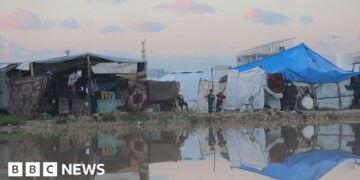
This latest development highlights a critical need for effective humanitarian assistance in a region already grappling with the aftermath of conflict. With many families living in tents and makeshift shelters, the intersection of severe weather and ongoing displacement underscores the vulnerabilities faced by those affected by recent hostilities.
Key Developments
- UN agencies report intensified conditions for displaced families due to heavy rain and cold.
- A UNICEF spokesman expressed grave concern about the risk of hypothermia among children living in inadequate shelters.
- Gaza’s health ministry reports one infant death linked to hypothermia and multiple fatalities from collapsed buildings.
- Emergency shelter capacities are overwhelmed, with significant flooding reported in multiple designated areas.
- The international community stresses the need for long-term humanitarian support and infrastructure rebuilding in Gaza.
Full Report
Impact of Severe Weather
Over the past week, Gaza has witnessed heavy rainfall that has severely worsened the living conditions for its displaced residents. UNICEF spokesperson Jonathan Crickx reported that rainfall reached up to 15 centimeters (approximately 6 inches) in some areas, leading to significant flooding. Many children are living in damp clothing, raising fears of hypothermia and other illnesses.
Casualties and Emergency Response
The health ministry in Gaza has confirmed one tragic death of a two-week-old infant due to hypothermia, with at least 11 additional fatalities attributed to building collapses caused by the inclement weather. There are conflicting reports regarding the total death toll, with Hamas civil defense officials citing higher figures, including fatalities among children.
Humanitarian Aid Efforts
In response to the escalating crisis, UN agencies have ramped up efforts to deliver additional support, including 250,000 winter clothing kits, 600,000 blankets, and 7,000 tents over the past nine weeks. However, despite these efforts, aid remains insufficient to meet the overwhelming needs of displaced families. Crickx emphasized the relentless efforts to distribute aid, pointing out that many families continue to experience severe hardships with every passing night.
Infrastructure Challenges
The ongoing rains have severely impacted over 40 emergency shelter locations, compelling many individuals to evacuate once again. Many makeshift tents are at risk of being blown away due to strong winds, as most are constructed from fragile materials that offer little protection against the elements.
International Perspectives
The International Committee of the Red Cross has voiced its concern over the infrastructure collapses resulting from the severe weather, calling for increased humanitarian assistance. Meanwhile, the Israeli military body Cogat has stated that claims of deliberate restrictions on aid are unfounded, asserting that hundreds of trucks carrying humanitarian supplies are entering Gaza daily.
Context & Previous Events
The current humanitarian crisis in Gaza follows a ceasefire that began after weeks of intense conflict sparked by a Hamas-led attack on southern Israel on October 7, 2023. Since then, casualty figures have soared, with over 70,600 reported deaths in Gaza due to Israeli military actions. As the international community grapples with these developments, plans for Gaza’s reconstruction and governance are on the agenda as part of the ceasefire’s second phase.