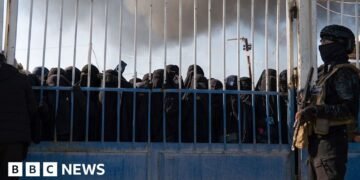























The United Nations has assumed control of a camp in northeastern Syria where thousands with alleged ties to the Islamic State are held, following the withdrawal of Kurdish-led forces amidst escalating tensions. This situation is critical due to recent unrest that has led to the suspension of humanitarian aid and concerns about security in the region.
This development underscores the complex interplay of regional power dynamics, particularly with the Syrian government regaining control over areas formerly autonomous under Kurdish administration. The management of the camp has significant implications for humanitarian efforts and the fate of detainees amid ongoing violence.
- The UN refugee agency, UNHCR, has officially taken over management responsibilities at the al-Hol camp.
- Tensions escalated after Kurdish forces withdrew, leading to unrest among residents attempting to flee.
- The U.S. has initiated the transfer of suspected IS fighters from Syria to Iraq, citing security concerns.
- Rights organizations have voiced concerns regarding the treatment of detainees following these transfers.
UN Management of Al-Hol Camp
The United Nations announced its takeover of management duties at the al-Hol camp on Thursday, following a chaotic withdrawal of Kurdish-led forces in the face of advancing Syrian government troops. The withdrawal incited unrest, with reports of residents rushing toward the camp’s perimeter in an attempt to escape, which subsequently led to looting and seditious behavior.
UN Security Council Briefing
UN official Edem Wosornu briefed the UN Security Council, indicating that Syrian forces have established a security perimeter around the camp, aiming to improve stability and restore humanitarian access. However, UN spokesman Stéphane Dujarric warned that conditions inside remain “tense and volatile,” with aid operations still on hold due to the ongoing unrest.
U.S. Efforts to Transfer Detainees
In parallel, U.S. Central Command has begun transferring about 7,000 suspected IS fighters from prisons in northeastern Syria to Iran. The operation reportedly includes the movement of the first 150 detainees to a secure location. Iraqi authorities have stated that all transferred individuals will face prosecution under Iraqi laws. Iraq’s deputy UN ambassador emphasized that while the transfer is a measure to enhance security, it should not become an enduring burden for Iraq.
International Concerns and Reactions
Rights groups have raised alarms about potential abuses that detainees may face following their transfer. The charity Reprieve reported that some individuals include British nationals, including minors, urging the UK government to take immediate action. Reprieve’s deputy director highlighted fears of torture and unfair trials for those affected.
Furthermore, the Kurdish-led Syrian Democratic Forces, alongside the U.S. and UN, have long advocated for the repatriation of international IS suspects, emphasizing hazardous conditions in camps and prisons. However, many countries have been reluctant to accept their nationals.
The ongoing conflict in Syria has seen shifts in control, particularly with the Syrian government regaining authority over much of the northeast, effectively ending years of Kurdish autonomy. Prior to the UN’s intervention, Kurdish-led forces managed the al-Hol camp, which has faced increasing challenges amid the violence.