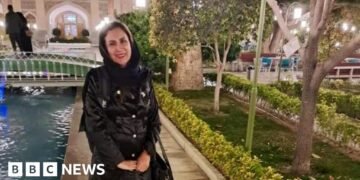























Zahra Tabari’s Death Sentence Sparks Global Outrage
UN experts and a coalition of 400 prominent women are urging Iran to refrain from executing Zahra Tabari, a 67-year-old electrical engineer and women’s rights advocate. Tabari’s case has ignited international concern, particularly regarding human rights violations and the treatment of activists in Iran.
Why It Matters
This situation underscores the growing alarm over Iran’s treatment of women and political activists, particularly as it ranks as the world’s leading executioner of women per capita. Tabari’s case exemplifies the potential consequences of advocating for gender equality, revealing a disturbing trend where expressions of dissent are increasingly met with severe state violence.
Key Developments
- Zahra Tabari was sentenced to death after a brief trial that lasted less than ten minutes.
- The verdict stemmed from allegations of collaborating with a banned opposition group, the People’s Mujahideen Organisation of Iran (PMOI).
- UN experts highlighted serious procedural violations, including inadequate legal representation and insufficient evidence against her.
- More than 400 prominent women, including several notable public figures, have signed an appeal for her release.
- At least 51 other individuals in Iran are also facing the death penalty on similar charges of national security offenses.
- Iran Human Rights reported a significant rise in executions, with over 1,400 people executed in 2025 alone, including 41 women.
Full Report
Details of the Case
Zahra Tabari was arrested in April during a raid on her home, conducted without a judicial warrant. Her family noted that she faced a month of solitary confinement, during which she was pressured to confess to crimes she did not commit. The court proceedings leading to her conviction were described as exceedingly brief, raising serious questions about the legitimacy of the trial.
UN Human Rights Council experts have condemned the trial process, which they state lacked the essential rights required for a fair legal procedure. They argue that the evidence presented was both limited and unreliable—cited items included a piece of cloth with the phrase “Woman, Resistance, Freedom” and an unpublished audio message.
Support from Global Advocates
The petition supporting Tabari’s release was coordinated by Justice for the Victims of the 1988 Massacre in Iran, a UK-based organization advocating for political prisoners. Notable signatories include several Nobel laureates and former heads of state, who emphasize the grave implications of Tabari’s situation. They declared that her case illustrates a broader pattern of oppression against women in Iran, stating that even peaceful activism can result in severe punitive measures.
Other Cases of Concern
Another Iranian woman, Pakhshan Azizi, a Kurdish rights activist, is facing similar charges and a potential death sentence for her advocacy work. UN experts have previously asserted that her sentencing is linked to her legitimate humanitarian efforts rather than any actual criminal behavior.
Context & Previous Events
The Iranian authorities have not publicly commented on Tabari’s case, which reflects a troubling climate for human rights in the country. The UN experts indicated that at least 51 individuals are currently facing the death penalty in Iran for various national security offenses, alongside charges that include “enmity against God” and “corruption on Earth.”
In recent years, Iranian executions have surged, with Iran Human Rights noting a 70% increase in executions compared to the same period in the previous year. As global scrutiny intensifies, the need for accountability and reform in Iran’s treatment of its citizens, especially women, becomes increasingly urgent.