






















Ukrainian Naval Drones Target Russian Oil Tankers in Escalating Conflict
Ukrainian naval drones successfully struck two oil tankers linked to Russia’s covert shipping operations in the Black Sea, marking a significant development in the ongoing conflict. The attacks are intended to undermine Russia’s vital oil revenue stream, which is crucial for financing its military efforts in Ukraine.
Why It Matters
This escalation highlights Ukraine’s commitment to targeting assets that contribute to Russia’s military capabilities. By attacking vessels involved in oil transport, Ukraine aims to send a clear message to both Russia and international shipping companies about the risks associated with transporting Russian oil amid ongoing sanctions.
Key Developments
- Ukrainian officials reported that naval drones hit the tankers, named Kairos and Virat, which are part of Russia’s “shadow fleet.”
- The attacks occurred off the Turkish coast, with the Kairos struck on Friday and the Virat hit again on Saturday.
- No fatalities or injuries were reported from the incidents, but they signal an escalation in Ukraine’s naval operations.
- Both tankers are flagged to Gambia and are listed among those subject to sanctions.
- The Ukrainian navy used Sea Baby drones, produced by the country’s security services, for the assaults.
- Turkish authorities assisted in firefighting efforts on the Kairos following the attack.
- In a related development, the Caspian Pipeline Consortium suspended oil loading operations at a Russian port due to damage from an overnight drone attack.
- Ukrainian President Volodymyr Zelensky announced a delegation led by security chief Rustem Umerov is heading to the U.S. for peace talks.
Full Report
Attacks on Oil Tankers
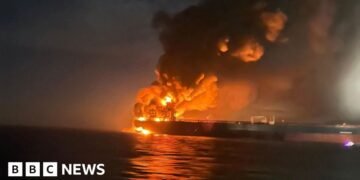
The Ukrainian strikes targeted two vessels identified as the Kairos and Virat, both of which are part of Russia’s efforts to circumvent Western sanctions that limit its oil exports. A verified video showed naval drones dramatically detonating upon impacting the ships, engulfing them in flames and smoke. The Kairos sustained damage in the southwestern section of the Black Sea, while the Virat was struck in a central part further east.
Responses from Authorities
Turkish officials confirmed their involvement in extinguishing the fires caused by the attacks and emphasized their support for the beleaguered tankers. The strikes underscore a broader Ukrainian strategy of directly targeting maritime assets linked to Russian oil revenues, which have been essential in funding the ongoing war efforts.
Caspian Pipeline Consortium Action
In a separate incident, the Caspian Pipeline Consortium announced a suspension of oil loading activities at the Novorossiysk port following drone-related damage. This move could have significant repercussions on oil transport from the Caspian region to international markets.
Diplomatic Developments
Amid these tensions, President Zelensky revealed plans for a diplomatic delegation to the U.S. The team, now led by Rustem Umerov, is looking to engage with American officials to further discussions on achieving a peaceful resolution to the ongoing conflict. This follows the resignation of the previous negotiator, Andriy Yermak, amidst a corruption investigation.
Context & Previous Events
The term “shadow fleet” refers to the collection of tankers that Russia relies on to evade international sanctions imposed after its 2022 invasion of Ukraine. Many vessels within this fleet are older and often have unclear ownership, complicating legal responses from Western nations. The reported attacks are significant as they deepen Ukraine’s strategic efforts to disrupt Russian oil exports amidst a protracted conflict.