






















UK Declines to Join Trump’s Proposed Board of Peace Amid Concerns Over Putin’s Role
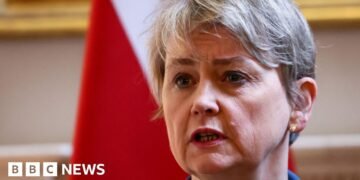
The UK has opted not to join the United States’ proposed Board of Peace, primarily due to reservations regarding Russian President Vladimir Putin’s possible involvement. Foreign Secretary Yvette Cooper confirmed the UK’s stance during a BBC interview, emphasizing the need for broader discussions related to peace in Ukraine.
Why It Matters
This decision highlights ongoing tensions in international diplomacy, particularly regarding the UK’s staunch support for Ukraine and concerns over Russia’s role in global peace initiatives. The Board of Peace, albeit aimed at resolving the Israel-Hamas conflict, raises questions about broader geopolitical implications and accountability.
Key Developments
- UK withholds signature: Yvette Cooper stated the UK will not sign the agreement at the World Economic Forum in Davos.
- Concerns about Putin: Cooper voiced apprehensions regarding Putin’s commitment to peace, particularly in light of the ongoing conflict in Ukraine.
- International support: Other nations, including Saudi Arabia, Turkey, Egypt, and Israel, have agreed to join the Board of Peace.
- Diplomatic relations: The UK’s relations with the US have faced strain following President Trump’s previous tariff threats toward Europe.
- Future discussions: The UK will engage in broader international discussions with allies on the peace process.
Full Report
UK’s Position on the Board of Peace
Cooper clarified in her interview that while the UK has been invited to join Trump’s initiative for peace, it would refrain from signing the treaty during the ceremony in Davos. She noted that the treaty evokes broader legal issues beyond the immediate goal of resolving the Gaza conflict.
"The UK has received an invitation to join the board and strongly supports Trump’s 20-point plan to end the war in Gaza," she explained. Nonetheless, she reiterated, "We won’t be one of the signatories today because this is a legal treaty that raises much broader issues."
Concerns Regarding Russia
The foreign secretary expressed specific concerns regarding Putin’s potential involvement, stating that there has been a lack of commitment from him to peace amidst the ongoing war in Ukraine. Cooper remarked, “We’ve still not seen any signs from Putin that there will be commitment to peace in Ukraine,” highlighting the disconnect between Russia’s actions and the goals of the Board of Peace.
Diplomatic Relations and Implications
Tensions between the UK and US have been exacerbated by Trump’s earlier threats to impose tariffs on European nations unless he received control over Greenland. However, Trump appeared to back down on this matter, opting instead to discuss potential cooperation regarding Greenland with NATO allies.
Cooper welcomed this apparent shift, indicating that the UK and its European partners had proposed constructive measures for Arctic security. Yet she echoed the voiced apprehensions from other UK cabinet ministers about Putin’s potential role in peace initiatives, given the gravity of the situation in Ukraine.
Meeting Schedule
As part of ongoing efforts to resolve global conflicts, President Trump is scheduled to meet with Ukrainian President Volodymyr Zelensky in Davos later this week. Trump has previously speculated that the two leaders are nearing an agreement, reflecting the urgency of diplomatic engagements in light of ongoing wars.
Context & Previous Events
The Board of Peace was originally presented as a mechanism to rebuild Gaza and outline its governance. However, leaked documents suggest that its scope significantly exceeds this initial intent, aiming to create an international organization focusing on stability and governance in conflict-affected areas.
Countries such as Pakistan, Turkey, Egypt, Saudi Arabia, and Qatar have expressed their intent to join the Board of Peace, while the Vatican confirmed that it has also received an invitation. Notably, the framework requires three states to sign the charter for it to take effect, with provisions for permanent seats for states contributing substantial financial resources.