






















UK and France Sign Pact for Potential Troop Deployment to Ukraine
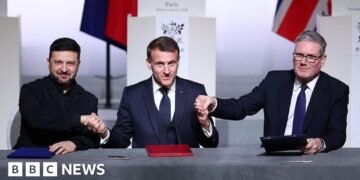
The UK and France have reached a significant agreement to deploy troops in Ukraine contingent upon the establishment of a peace deal with Russia. This declaration, announced by UK Prime Minister Sir Keir Starmer following discussions with allied countries in Paris, underscores a growing commitment to bolster Ukraine’s defenses and deter future aggressions from Russia.
Why It Matters
This development is pivotal as it marks a shift in the West’s stance towards Ukraine, solidifying military support amid ongoing hostilities with Russia. The planned military hubs and verified ceasefire monitor involvement could enhance Ukraine’s strategic position while increasing pressure on Russia as it warns against foreign troop presence.
Key Developments
- The UK and France signed a declaration of intent regarding troop deployment in Ukraine if a peace agreement is achieved with Russia.
- Starmer announced the establishment of military hubs in Ukraine aimed at securing weapons and military resources.
- The US is expected to lead efforts in monitoring any potential ceasefire, ensuring compliance from both sides.
- Ukrainian President Volodymyr Zelensky described the Paris talks as a “huge step forward,” contingent upon their effectiveness in concluding the conflict.
- Discussions highlighted unresolved issues regarding territory and security guarantees, with ongoing tensions surrounding the Donbas region.
Full Report
Deployment Plans and Military Hubs
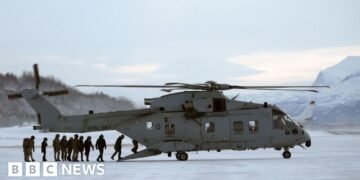
In a joint press conference, Prime Minister Starmer articulated the commitment to deploy British and French forces in Ukraine, establishing a legal framework for operations aimed at securing the nation’s airspace and seas. This comes as discussions of “military hubs” are proposed to safeguard weapons and defense supplies.
US Role in Ceasefire Monitoring
Starmer indicated that London would support any US-led initiatives to verify a potential ceasefire. Top US negotiator Steve Witkoff elaborated on the necessity of “durable security guarantees” for Ukraine, suggesting that substantial diplomatic negotiations have been made to address Kyiv’s critical security concerns. Witkoff emphasized that ensuring a lasting peace is imperative for the future well-being of the Ukrainian people.
Statements from World Leaders
French President Emmanuel Macron expressed optimism following the talks, noting substantial progress in forming “robust” security guarantees for Ukraine. President Zelensky echoed this sentiment but stressed that meaningful outcomes would only materialize if they effectively lead to the cessation of hostilities. Last week, he asserted that a peace deal was tantalizingly close, with only 10% remaining to finalize.
Russian Reactions and Geopolitical Tensions
Despite the optimistic tones from Western leaders, Russia has condemned the presence of foreign troops in Ukraine, labeling them as “legitimate targets.” President Vladimir Putin has reiterated demands for the withdrawal of Ukrainian forces from the eastern Donbas region, insisting on no compromises in negotiations. Presently, Russian forces control around 20% of Ukrainian territory, mainly in the contested Donetsk and Luhansk regions, which form part of the industrial landscape of Donbas.
Context & Previous Events
The full-scale Russian invasion of Ukraine began in February 2022, leading to sustained international backlash and the formation of allied coalitions to support Ukraine. Previous peace proposals, including a 28-point plan, faced criticism from Kyiv and European nations for favoring Russian interests, prompting intensified diplomacy among the US, Ukraine, and European leaders. Kyiv recently submitted an updated 20-point peace proposal to the US, addressing security guarantees and reconstruction provisions.