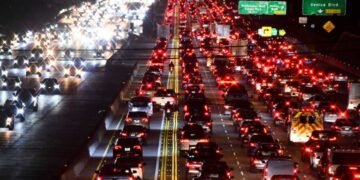























Traffic Congestion Hits Record Highs Across U.S. Metropolitan Areas
Traffic congestion in U.S. cities has rebounded to record levels following the COVID-19 pandemic, with notable increases in delays across urban centers like San Diego and Greater Los Angeles. Researchers report that commuters are now spending significantly more time in traffic, highlighting a troubling trend that affects daily life and regional economies.
Why It Matters
The resurgence of traffic congestion raises concerns about urban infrastructure, public safety, and the economic implications for commuters and businesses alike. As delays stretch beyond traditional rush hours and into weekends, this new reality complicates daily commutes and stresses transportation systems already under pressure.
Key Developments
- San Diego experienced a more than 37% increase in traffic delays per commuter since 2019.
- Average traffic delays in Greater Los Angeles reached an astonishing 137 hours per year for each commuter.
- Traffic patterns have shifted, with congestion now spreading throughout more hours of the day, impacting non-commuters as well.
- Efforts to address congestion, such as dynamic pricing toll strategies in various metropolitan areas, are gaining attention.
Full Report
Rebounding Congestion Levels
Data from the Texas A&M Transportation Institute reveals a dramatic increase in traffic congestion, with the average American now spending approximately 63 hours annually caught in delays. David Schrank, a senior research scientist at the institute, notes that post-pandemic traffic behaves differently than it did before, affecting not just typical rush hours but a broader range of times, thus impacting a larger segment of the population.
Regional Insights
Many metropolitan areas have reported notable spikes in traffic delays. For example, San Diego topped the list with a substantial increase since 2019. Other cities such as Miami, Phoenix, and the San Francisco Bay Area also saw considerable rises. However, no city compares to the congestion experienced in Greater Los Angeles.
Economic Factors and Solutions
According to Michael Manville, a professor at UCLA, there is a correlation between economic activity and traffic congestion. When economies flourish, as seen currently, it often leads to worse congestion. In contrast, regions like Washington, D.C., have witnessed a decrease in traffic, likely due to ongoing remote work policies within the federal government and effective regional congestion-fighting measures.
Dynamic pricing toll strategies are among the proposed solutions to manage congestion. Robert Puentes from the Brookings Institution suggests that adjusting tolls based on peak demand could alleviate excessive traffic. His observations from Northern Virginia indicate potentially successful outcomes from adopting such policies.
In New York City, a similar approach has been implemented. A congestion pricing initiative, which charges car drivers up to $9 to enter Lower Manhattan, has already led to reduced traffic in the toll zone since its January launch, although its long-term impact on commuting patterns is still being evaluated.
Context & Previous Events
During the COVID-19 pandemic, traffic congestion across the United States saw a notable decline due to lockdown measures and changes in commuting patterns. However, as restrictions eased and economic activities resumed, congestion levels rapidly approached and even exceeded pre-pandemic markers, resulting in the current state of escalating traffic delays nationwide.






