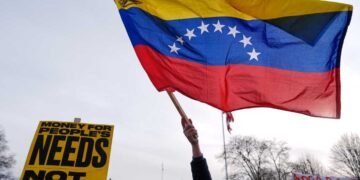























U.S. Military Operation Leads to Capture of Venezuelan President Nicolás Maduro
The recent U.S. military operation that resulted in the capture of Venezuelan President Nicolás Maduro has sparked a wave of reactions from political leaders across the spectrum. While many Republican lawmakers support President Trump’s action, significant concerns have been raised regarding its legality and potential consequences.
Why It Matters
This military intervention marks a pivotal moment in U.S.-Venezuela relations, raising questions not only about international law but also about the implications for U.S. foreign policy. As the conflict underscores divisions within American politics, it also illustrates the broader stakes in addressing authoritarian regimes in Latin America.
Key Developments
-
Operation Outcome: The U.S. successfully captured Nicolás Maduro and his wife during a military action on January 3, 2026.
-
Support from GOP: Most Republican leaders expressed support, though a minority raised concerns regarding the legality and ramifications of the military intervention.
-
Skepticism and Opposition: Several Republican lawmakers voiced skepticism, questioning whether military action would lead to genuine democratic reform in Venezuela.
- Democratic Condemnation: Nearly all Democratic leaders criticized the intervention, labeling it a violation of both U.S. law and international norms.
Full Report
Republican Reactions
While many Republican leaders lauded Trump’s military decision, a faction within the party expressed caution. Kentucky Rep. Thomas Massie criticized the lack of congressional approval for such action, urging the necessity for legislative debate before committing American resources. He remarked on the historical failures of regime change efforts in other countries, wondering if a similar miscalculation would occur in Venezuela.
Rep. Marjorie Taylor Greene resonated with skepticism, asserting that the stated objective of disrupting drug trafficking was disingenuous. She claimed that the military intervention contradicted the "America First" principles many Republicans championed.
Conversely, some Republican members like Rep. Don Bacon acknowledged the potential dangers of setting a precedent for military interventions that might empower foreign autocratic regimes to justify their own actions.
Senators Rand Paul, Lisa Murkowski, and Dan Sullivan echoed these sentiments, discussing concerns over executive power and the precedent of unilateral military action without congressional consent. Murkowski emphasized the need for further briefings on the operation’s legal justifications following the invasion.
Democratic Response
Democratic leaders condemned the military operation, asserting that it exemplified a misguided pursuit of regime change. New York Mayor Zohran Mamdani publicly voiced his opposition to the action, deeming it a violation of international law.
Senate Minority Leader Chuck Schumer described Trump’s actions as "bad faith," fearing the implications of the administration’s intent to establish control in Venezuela. He pointed out earlier assurances from the Trump administration that military actions would not unfold without congressional oversight.
Senator Adam Schiff critiqued the operation as reckless, warning of potential chaos resulting from the lack of public and legislative backing. Independent Senator Bernie Sanders also voiced strong opposition, labeling the military intervention as imperialism and an abuse of power that undermined democratic principles.
Rep. Alexandria Ocasio-Cortez argued that the military action sought to distract from pressing domestic issues, suggesting that underlying motives revolved around oil and regime change rather than addressing drug trafficking.
Context & Previous Events
The invasion follows a long history of U.S. involvement in Latin American politics, characterized by attempts at regime change. Concerns about the legality of military actions, particularly without congressional approval, have surfaced repeatedly in discussions surrounding U.S. foreign policy.
The recent operation draws parallels to previous contentious interventions in countries like Iraq and Libya, underlining the complicated legacy of American military actions abroad.






