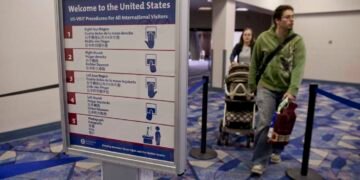























In a move that could reshape the landscape of international travel to the U.S., the Trump administration is recommending that visitors from countries participating in the visa waiver program provide extensive personal data, including five years of social media activity. This proposal, unveiled by the Department of Homeland Security, aims to bolster national security measures by increasing scrutiny on foreign tourists.
The proposed regulations would significantly deepen the information required from travelers from 42 nations that currently enjoy visa-free access to the U.S. If enacted, the measures would reinforce existing restrictions and potentially deter visitors due to increased invasiveness.
Key Developments
- The Department of Homeland Security is seeking social media histories from tourists from 42 visa waiver countries.
- Travelers would need to submit five years’ worth of social media activity, emails from the past decade, and immediate family contact information.
- Scrutiny could extend to IP addresses and metadata from submitted photos.
- The proposal is open for public comment for 60 days before potential implementation.
- Current visa waiver applicants may face a shift to a mobile-only application process.
Full Report
Enhanced Screening Measures
The proposed requirements underline the administration’s commitment to safeguarding the nation against perceived threats from travelers. According to U.S. Customs and Border Protection, the mandatory social media submission aligns with President Trump’s executive orders aimed at averting terrorist activities and other security concerns. Notably, no specific guidelines have been provided to clarify which types of online behaviors might be deemed as potential threats.
Concerns Over Discretion
Experts in immigration policy, including Marissa Montes from Loyola Law School, have expressed concern over the vagueness of the proposed regulations. Montes indicates that while social media screening is not unprecedented, the broad discretion afforded to officials might lead to arbitrary interpretations of what constitutes a security risk. She emphasized that any online activity perceived as contrary to the administration’s values could result in denial of entry into the U.S., creating an atmosphere of caution surrounding social media engagement.
Previous Policies and Proposed Changes
Under current guidelines, citizens from allied countries such as the United Kingdom and Germany can access the U.S. by simply submitting an online application. However, this process may evolve into a mobile-only platform if the latest regulations are implemented. The recent announcement reflects ongoing trends in the administration’s approach to immigration, including the scrutiny of social media accounts of foreign students and heightened rejection rates for specific visa categories.
Context & Previous Events
In June, the State Department began evaluating social media profiles of foreign students, indicating a shift towards more rigorous monitoring of incoming individuals. Additionally, earlier this month, directives were issued to reject visa applications based on the applicants’ work in content moderation or fact-checking, citing these roles as overly intrusive to free speech.






