






















U.S. Military Operation Transforms Venezuela’s Political Landscape
In a dramatic shift in U.S. foreign policy, President Donald Trump has orchestrated a military operation resulting in the arrest of Venezuelan leader Nicolás Maduro. This high-stakes intervention not only asserts American military dominance in Latin America but also raises concerns about regional stability and adherence to international law.
Why It Matters
The operation in Venezuela marks a significant demonstration of U.S. military force and raises critical questions about the future of U.S. involvement in Latin America. As the Trump administration seeks to redefine global power dynamics, this move could lead to further unrest in the region and challenge the principles of sovereignty and international law. The ramifications extend beyond Venezuela, prompting scrutiny from global leaders.
Key Developments
- Military Operation Successful: Maduro was arrested without any American casualties, showcasing U.S. military effectiveness.
- U.S. Control Declared: Trump announced that the U.S. would oversee Venezuela "until a safe, proper and judicious transition" occurs.
- Support from Officials: Key figures, including Secretary of State Marco Rubio, voiced support for the military action, indicating a unified front in U.S. policy.
- Potential for Chaos: Experts have warned that Maduro’s removal may lead to violent power struggles among armed factions in Venezuela.
- Rejection of Democratic Leaders: Trump dismissed the notion that notable opposition figures, like María Corina Machado, should lead Venezuela, backing instead Maduro’s Vice-President, Delcy Rodríguez.
Full Report
The Operation
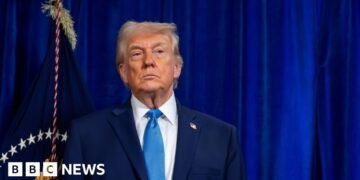
In a news conference at Mar-a-Lago, Trump celebrated the successful military operation, where the U.S. assembled significant resources to achieve its goal. He described the mission as a textbook example of American military capability. Trump’s remarks implied a readiness for continued military presence, stating, "we’re not afraid of boots on the ground if we have to have [them]."
Political Consequences
Despite the apparent triumph, the long-term implications of U.S. military actions in Venezuela are uncertain. The International Crisis Group issued warnings about possible escalation of violence and instability following Maduro’s fall. The political landscape in Venezuela remains fraught with challenges, as civilian militias and armed factions resist plans for a U.S.-backed transition.
Reactions from Global Leaders
Responses to the U.S. intervention have ranged from cautious acknowledgment to outright condemnation. Chinese officials decried the action, labeling it a violation of Venezuela’s sovereignty. Senator Mark Warner raised alarms about the potentially destabilizing precedent set by the U.S., suggesting that such actions could encourage aggressive maneuvers by other nations, such as China regarding Taiwan.
Context & Previous Events
This latest intervention follows a long history of U.S. military involvement in Latin America. Trump’s announcement drew parallels with past military actions, such as the U.S. invasions in Iraq and Afghanistan, which resulted in significant geopolitical upheaval. The Monroe Doctrine, which historically sought to limit foreign interference in the Americas, was referenced as Trump emphasized a newfound American dominance in the region.
The complexities surrounding Venezuela’s political situation are compounded by the legacy of Hugo Chávez’s regime, along with the economic and humanitarian crises that have persisted over the years. As the U.S. navigates this turbulent landscape, the outcome remains to be seen, with local and international stakeholders closely monitoring the developments.