




















Trump Warns Iran Amid Ongoing Protests
U.S. President Donald Trump has issued a stark warning to Iranian authorities to refrain from harming peaceful protesters, pledging that Washington is prepared to intervene if needed. This statement comes as violent demonstrations sweep through Iran, following escalating economic distress.
Why It Matters
The protests in Iran, which have resulted in multiple fatalities, highlight significant unrest fueled by economic hardship and political discontent. Trump’s comments signal a potential shift in U.S. foreign policy regarding Iran, emphasizing support for human rights while also raising concerns about regional stability.
Key Developments
- Trump warned Iran that the U.S. “will come to their rescue” if peaceful protesters are attacked.
- At least six fatalities have been reported since protests began, with violence escalating recently.
- An adviser to Iran’s Supreme Leader cautioned against U.S. intervention, warning it could destabilize the region.
- Protests have spread across multiple cities, fueled by discontent over the deteriorating economic situation.
- The Iranian government has threatened a strong response to any attempts to create instability.
Full Report
Trump’s Statement
In a recent post on his social media platform, Trump called for the protection of peaceful demonstrators in Iran, stating that the U.S. was “locked and loaded” to take action. He emphasized that if Iran “shots and violently kills peaceful protesters,” America would intervene.
Reactions from Iran
Ali Larijani, a senior adviser to the Supreme Leader of Iran, reacted promptly, advising Trump to exercise caution if he chooses to interfere. He warned that such actions could lead to chaos throughout the Middle East and pose risks to American interests.
Protests Intensify
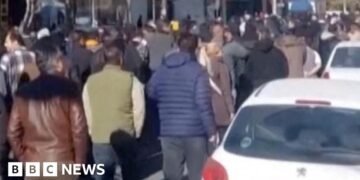
The protests, ignited by anger over economic conditions, began in Tehran and gathered momentum over the week. Reports suggest that unrest has resulted in at least six deaths, including clashes between demonstrators and security forces in various cities. Two protesters were named among the deceased in the city of Lordegan, as footage surfaced of violent confrontations between crowds and security personnel.
The unrest follows a pattern of protests in the region, echoing earlier movements where dissatisfaction with government policies and economic management led to widespread demonstrations.
Government’s Stance
President Masoud Pezeshkian of Iran has stated he will address the “legitimate demands” of protesters. Conversely, Mohammad Movahedi-Azad, the country’s Prosecutor-General, signaled a tough stance against any actions perceived as destabilizing, promising a “decisive response.”
Context & Previous Events
The current wave of protests represents the most extensive civil unrest in Iran since the upheaval sparked by the death of Mahsa Amini in custody last year. Amini was detained for alleged violations of the country’s dress code, and her death ignited outrage both domestically and internationally.
In June, U.S. military operations against Iranian nuclear sites took place under Trump’s directives, a move that has been debated regarding its effectiveness and repercussions. Iran retaliated by targeting a major U.S. military base in Qatar, underscoring the potentially volatile nature of U.S.-Iran relations.