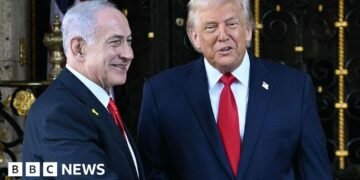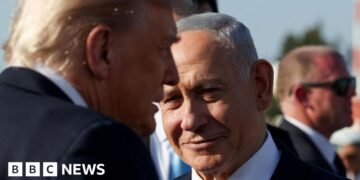























Trump Hosts Netanyahu as Gaza Ceasefire Discussions Loom
U.S. President Donald Trump is set to pivot his focus to the Middle East on Monday, welcoming Israeli Prime Minister Benjamin Netanyahu to Florida for critical discussions. The talks are expected to concentrate on the ongoing Gaza situation, along with various other urgent regional issues, potentially shaping the future of U.S.-Israel relations and the broader Middle East landscape.
Why It Matters
The outcome of this meeting carries significant weight, as the U.S. has been a steadfast ally of Israel throughout recent conflicts. As the leaders debate crucial topics like ceasefire progress and security measures, their alignment—or lack thereof—on these matters could influence the trajectory of the region’s geopolitical dynamics.
Key Developments
- Trump and Netanyahu will meet for the sixth time since Trump resumed office.
- Discussions will address the future relationship with Syria, Iranian military rearmament, and Hezbollah’s influence in Lebanon.
- A focus will be on the Gaza ceasefire deal, where divergent positions have emerged between the U.S. and Israel.
- Storms continue to affect Gaza, with reported fatalities linked to harsh weather conditions.
- Critics suggest Netanyahu may prefer to delay the ceasefire’s political components, prioritizing disarmament of Hamas.
- Recent statements from Israeli officials indicate ongoing plans for settlement expansions in the West Bank, raising concerns about Palestinian statehood.
Full Report
Gaza Ceasefire Developments
Negotiations surrounding the Gaza ceasefire deal will be a focal point of the meeting. The Trump administration aims to advance to the second phase next month, which includes the establishment of a Palestinian technocratic government and the withdrawal of Israeli troops. However, Israeli Defense Minister Israel Katz has signaled intentions to expand settlements in Gaza and maintain a military presence, complicating the path forward for peace.
In Gaza, severe weather has exacerbated the humanitarian crisis, with reports of fatalities attributed to freezing conditions. Approximately three deaths have been recorded since mid-December due to cold-related issues, alongside another 17 deaths from collapsing infrastructure during storms. Critics argue Israel has not fulfilled its ceasefire obligations by limiting access to essential supplies, while Israeli officials contend they are facilitating aid deliveries.
Regional Tensions and Military Considerations
The talks are also expected to touch on regional security, particularly concerning Iran. Following a summer conflict, Netanyahu is likely to request U.S. support for military actions against Iranian rearmament efforts. The Iranian government has escalated rhetoric against Israel and its allies, underscoring the urgency of dialogues around military strategies in the region.
Netanyahu’s Objectives in the Meeting
Netanyahu’s agenda may include securing U.S. backing for further military interventions and revisiting discussions about the annexation of portions of the West Bank. The Israeli government has framed its ongoing settlement activities as a de facto annexation, which is considered illegal under international law. This position contradicts the peace framework envisaged by the Trump administration.
Context & Previous Events
The planned meeting marks a pivotal moment in U.S.-Israel relations amid a backdrop of ongoing conflict in Gaza, which has claimed the lives of at least 414 Palestinians since the ceasefire began. Various international agencies have called for a reassessment of the ceasefire terms, aiming for comprehensive access to humanitarian aid.
Hamas has indicated that its disarmament should coincide with progress towards an independent Palestinian state, while Netanyahu has consistently dismissed this notion since ceasefire conditions were established. As this meeting unfolds, attention remains firmly fixed on the outcomes and their implications for peace efforts in the region.