






















Trump Administration Moves to Challenge State AI Regulations
U.S. President Donald Trump has signed an executive order aimed at countering state-level regulations governing the artificial intelligence (AI) industry. This initiative underscores the administration’s intention to streamline AI governance nationally, positioning it against perceived cumbersome state laws.
Why It Matters
The executive order seeks to centralize control over AI regulations amid fears that state laws may stifle innovation and competitiveness, particularly in relation to global competition, especially with China. This move raises significant questions about the balance of power between federal and state authorities in regulating technology, particularly around issues like child safety and potentially harmful usages of AI.
Key Developments
- The order establishes an "AI Litigation Task Force" within the Justice Department to challenge state regulations.
- The Federal Trade Commission (FTC) and Federal Communications Commission (FCC) are directed to align with the administration’s AI strategy.
- Secretary of Commerce Howard Lutnick is tasked with investigating the possibility of withholding federal funding from states with unfavorable AI legislation.
- While some state laws will be scrutinized, Trump’s administration emphasizes a commitment to protecting child safety.
- Critics within the Republican Party express concerns about the potential oversights in policymaking related to AI.
Full Report
Executive Order Overview
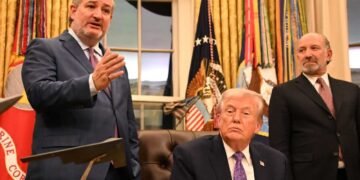
During a signing ceremony at the White House on December 11, 2025, Trump indicated the urgent need for a unified approach to AI regulation, contrasting this with China’s centralized governance. Trump’s advisor on AI, David Sacks, clarified that the administration would selectively challenge state regulations, particularly focusing on those deemed excessively restrictive, while maintaining protections for children.
Legal Challenges and Concerns
The executive order is expected to face legal opposition, with tech policy analysts asserting that the administration lacks the authority to override state laws without congressional backing. Critics, including some conservative organizations, have expressed disappointment, labeling this effort as a lost opportunity for comprehensive, bipartisan dialogue on technology regulations. Michael Toscano of the Family First Technology Initiative underscored the importance of involving diverse viewpoints in developing AI laws.
Impact on State Governance
Opponents of the order express fears that its implications could create a chilling effect on states’ willingness to enact protective legislation, especially regarding children’s safety. Adam Billen from the nonprofit Encode emphasized that the federal government’s aggressive stance could lead to significant uncertainty, possibly granting tech companies leeway in unregulated areas.
Mixed Reactions Within the GOP
Several Republican governors and lawmakers have voiced opposition to the federal government’s encroachment on state regulations. Utah Governor Spencer Cox articulated a preference for a presidential directive that does not inhibit state efforts to protect families. Florida Governor Ron DeSantis reiterated that state legislative actions cannot be preempted by an executive order, suggesting that any change should come through Congress instead.
Broader Legislative Context
Despite a push for regulatory certainty, efforts within Congress to create a cohesive AI legislative framework have largely stalled. Several state-level initiatives have emerged instead, including bans on creating non-consensual images via AI and mandates for transparency in AI usage among government agencies and businesses.
Context & Previous Events
Recent months have seen unsuccessful attempts by GOP lawmakers to preempt state-level AI regulations in various legislative contexts, including the annual defense spending bill. An earlier leaked version of the executive order had sparked bipartisan opposition, and efforts to impose an AI moratorium were recently scrapped from legislative discussions.
These discussions highlight a growing divide within the Republican Party regarding the appropriate level of regulation for technology companies, particularly as the competition with international players like China intensifies. The implications of these developments could reverberate throughout both state and federal policies as the landscape of AI continues to evolve.






