






















White House Plans to Dismantle National Research Center Sparks Concerns
The White House is moving forward with plans to dismantle the National Center for Atmospheric Research (NCAR) in Boulder, Colorado, a decision experts warn could harm the accuracy of weather forecasting and climate research. This move marks a continuation of President Trump’s stance against climate science, which critics argue jeopardizes public safety and scientific integrity.
Why It Matters
The proposed breakup of NCAR, a leading institute in atmospheric research established over six decades ago, raises alarms about the future of scientific understanding and public safety regarding climate-related events. As severe weather incidents become increasingly prevalent, the center’s work in forecasting plays a critical role in protecting communities.
Key Developments
- Announcement: Russ Vought, Director of the Office of Management and Budget, revealed plans to dismantle NCAR, labeling it a source of "climate alarmism."
- Political Backlash: Colorado officials, including Gov. Jared Polis, condemned the plan, arguing it poses risks to public safety and shows a political vendetta against the state.
- Response from Experts: Antonio Busalacchi, head of the University Corporation for Atmospheric Research, criticized the lack of communication prior to the announcement and characterized the decision as politically motivated.
- Weather Research Impact: Experts emphasize the detrimental effect closing NCAR could have on advancements in forecasting technologies, which rely on the center’s extensive research and resources.
Full Report
Decision to Dismantle NCAR
The White House’s intent to divide up NCAR has ignited controversy among scientists and political leaders. Vought’s characterization of the center as a purveyor of "climate alarmism" has been met with skepticism, particularly among experts who regard NCAR as a fundamental pillar in atmospheric research.
Busalacchi has raised concerns over the implications for both weather and climate research, emphasizing that the two fields are interlinked and must not be treated in isolation. He points to NCAR’s critical role in developing forecasting techniques that have significantly improved public safety.
Political Reactions
The proposal has drawn swift backlash from Colorado’s political leaders. Gov. Polis stated that the administrative action threatens public safety and undermines the science necessary for effective climate management. Sen. Michael Bennet and Rep. Joe Neguse charged that the proposed closure is retaliatory, linked to the state’s political decisions regarding former Mesa County clerk Tina Peters, who is currently serving a prison sentence related to election misconduct.
In their joint statements, these leaders described the plan as "deeply dangerous," reflecting concerns that political motivations are overshadowing the necessity of scientific research.
Contributions of NCAR
NCAR has been instrumental in developing key technologies for weather forecasting. Notable achievements include the creation of dropsondes and the Weather Research and Forecasting Model (WRF), vital tools that assist meteorologists globally in predicting weather patterns, including severe events such as hurricanes.
Experts assert that the dismantling of this facility could impede future advancements in weather and climate science. Jason Furtado, an associate professor of meteorology, highlighted that many scientific studies and advancements in understanding atmospheric phenomena depend heavily on NCAR’s resources.
Context & Previous Events
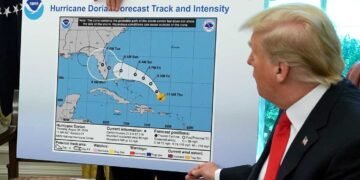
The current situation reflects a broader trend of the Trump administration’s contentious relationship with the scientific community. Previous actions included the disbanding of climate science teams and notable incidents such as the "Sharpiegate" controversy, where the President displayed an altered map to suggest Hurricane Dorian was threatening Alabama, contradicting official forecasts. Additionally, proposed cuts of approximately 27% to the budget of the National Oceanic and Atmospheric Administration (NOAA) have raised further concerns about the future of climate research.
The future of weather forecasting and climate research hangs in the balance as the White House continues its efforts to reshape vital institutions.






