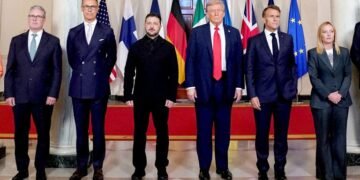























Trump’s Stark Critique of Europe Raises Concerns Among Leaders
In a recent interview, former President Donald Trump delivered a scathing critique of Europe, labeling the continent as "weak" and "decaying." His comments, which follow the release of a new U.S. national security strategy, have left European leaders grappling with the implications for transatlantic relations and their security policies.
Why It Matters
Trump’s assessment sparks significant unease as Europe navigates its security amidst rising global tensions. His comments contribute to an atmosphere of uncertainty regarding America’s commitment to its European allies at a time when unity is crucial, particularly in the face of the ongoing conflict in Ukraine. With calls for Europe to become more self-reliant growing louder, the dynamics of U.S.-Europe relations may be reshaped.
Key Developments
- Trump criticized European leaders for inaction regarding the Russia-Ukraine war, stating, "They talk but they don’t produce."
- He claimed that the lack of European decisive action puts Russia in a strong position and suggested that under his leadership, World War III could have been averted.
- German Chancellor Friedrich Merz responded, calling parts of the U.S. national security strategy "unacceptable" from a European perspective, emphasizing Europe’s capability to manage its own democratic values.
- Merz expressed the need for Europe to become more independent in security matters, noting that "America first" should not eclipse European interests.
- Trump also denounced European migration policies, warning that if not addressed, many countries could become "non-viable."
- He implied future involvement in European elections by considering the endorsement of preferred candidates, which European leaders regard as interference in domestic affairs.
Full Report
Trump’s Criticism of Europe
During his interview, Trump articulated a lack of faith in Europe’s approach to various issues, particularly its dealings with the ongoing war in Ukraine. He characterized European leaders as ineffective and overly concerned with political correctness, a viewpoint that may resonate differently across the Atlantic.
Reactions from European Leaders
European officials are expected to respond cautiously to Trump’s remarks. Chancellor Merz articulated a desire for Europe to enhance its security autonomy, indicating that European nations can and should take charge of their own democratic and security agendas. His comments suggest a push against perceived U.S. paternalism.
The Immigration Debate
Trump’s condemnation of Europe’s immigration policies reflects a broader anxiety that resonates with many European voters and leaders. He warned that current trends could lead to "civilization erasure" within certain NATO countries, a claim that aligns with heightened public concern around migration in the region.
Context & Previous Events
Trump’s criticism of Europe coincides with the recent release of the U.S. national security strategy, which emphasizes the importance of U.S. interests abroad and touches on themes of maintaining democracy in Eastern Europe. These sentiments echo previous remarks made by Trump, further establishing the framework for his critique of European leadership during his term and beyond.
As both sides navigate the fallout from Trump’s recent comments, the importance of collaboration in addressing pressing global issues remains paramount.






