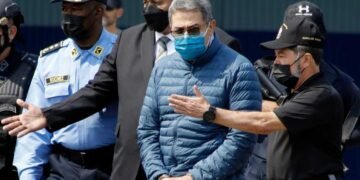























Trump Announces Pardon for Former Honduran President Hernandez
Former U.S. President Donald Trump has declared his intention to pardon Juan Orlando Hernandez, the former leader of Honduras, who was convicted in 2024 for drug trafficking and weapons offenses. The decision comes as Hernandez serves a 45-year sentence in a U.S. prison and raises questions about U.S.-Honduras relations amid upcoming elections in the Central American nation.
Why It Matters
This development is significant both for U.S. foreign policy and for the political landscape in Honduras. Trump’s support for Hernandez and backing of presidential candidate Nasry "Tito" Asfura suggests a potential shift in U.S. priorities in the region. The outcome of the Honduran election may have repercussions for democracy and stability in Central America.
Key Developments
- Trump announced the pardon for Hernandez via social media, stating that he had been "treated very harshly and unfairly."
- Hernandez, who served two terms as president, was convicted in March 2023 and has been appealing the verdict while incarcerated.
- A lawyer for Hernandez expressed gratitude for the pardon, viewing it as a step toward healing bilateral relations between the U.S. and Honduras.
- Trump is also endorsing Asfura in the upcoming presidential election, framing it as a test for democracy in the country.
- Asfura’s candidacy is significant, as he has pledged to address infrastructure issues, although he faces allegations of embezzlement, which he denies.
Full Report
Pardon Details
Trump’s announcement about Hernandez’s pardon is part of a broader narrative surrounding U.S. engagement in Central America. Despite Hernandez’s serious convictions, Trump referenced advice from respected individuals as justification for his decision to offer clemency. Hernandez’s legal representation was quick to commend the move, suggesting it restores justice and fosters a stronger partnership between the U.S. and Honduras.
Political Implications
In a separate post, Trump illustrated his concerns regarding the Honduran elections, indicating that if Asfura does not succeed, the U.S. will not continue to invest in a country led by what he termed a "wrong leader." This illustrates the Trump administration’s commitment to supporting certain political figures who align with its objectives in the region.
Asfura’s campaign is part of a contentious electoral landscape that also includes notable candidates such as Rixi Moncada from the Libre party, and Salvador Nasralla from the Liberal Party, both of whom present alternative visions for Honduras.
Context & Previous Events
Hernandez’s extradition to the U.S. occurred in April 2022, where he faced charges linked to drug trafficking. He argued against the fairness of his trial and has been in a federal penitentiary since his conviction. Outgoing Honduran President Xiomara Castro has maintained a leftist stance while cooperating with U.S. policy, hosting visits from key U.S. officials.
In the broader context, the political dynamics in Honduras remain volatile, with the ongoing influence of populist movements and concerns over democracy influenced by figures such as Nicolás Maduro of Venezuela. Argentina’s President Javier Milei has also publicly supported Asfura, indicating a growing international alliance among right-leaning leaders.






