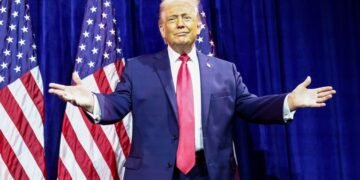























Trump Details Venezuelan Operation Amid Rising Tensions
The United States continues to grapple with the aftermath of a military operation aimed at capturing Venezuelan President Nicolas Maduro, with President Donald Trump revealing troubling details about the mission that reportedly left many dead. The fallout has incited protests from Maduro’s supporters, further complicating an already tense situation in the region.
Why It Matters
This military operation underscores the heightened stakes in U.S.-Venezuelan relations, with implications for regional stability and U.S. foreign policy. The loss of life, particularly among Cuban operatives, raises questions about the humanitarian impact of U.S. interventions. Additionally, the operation’s complexities reveal the challenges in addressing the crises stemming from Maduro’s regime.
Key Developments
- Trump described the operation as "brilliant tactically" but acknowledged significant casualties, noting that most fatalities were among Cuban forces.
- Venezuela’s military reported at least 24 of its security officers killed, while Cuba confirmed 32 of its personnel were lost.
- An Associated Press analysis indicated potential civilian fatalities, though exact figures remain unclear.
- Trump claimed that U.S. personnel involved incurred no losses and criticized Democratic leaders for not acknowledging the operation’s success.
- U.S. House Speaker Mike Johnson clarified that the actions did not intend to change the Venezuelan regime.
Full Report
Operation Details and Fallout
In a speech at the Kennedy Center, President Trump characterized the military operation as a significant success while lamenting the "many" lives lost during the endeavor. He specifically noted that fatalities were primarily among Cuban military and police officers, with Trump stating, "a lot of people were killed," but assured that no U.S. soldiers had perished.
Venezuela’s military swiftly condemned the operation, reporting that 24 of their security personnel were killed. In contrast, the Cuban government mentioned the deaths of 32 of its military and police officers present in Venezuela at the time. Reports from the Associated Press suggested that the civilian death toll could be higher, although precise numbers are yet to be established.
Responses and Reactions
Accompanying Trump’s remarks, footage emerged showing Venezuelan Interior Minister Diosdado Cabello and armed supporters rallying behind Maduro, chanting defiant slogans. In response to the international criticism surrounding the operation, Venezuelan Attorney General Tarek Saab announced that a special team of prosecutors would investigate the deaths resulting from the U.S. actions. Saab criticized the U.S. for attempting to initiate a trial against Maduro, questioning America’s jurisdiction over such matters.
Trump further deflected criticism by emphasizing the military’s tactical superiority during the operation, noting the deployment of 152 aircraft and claiming that U.S. personnel on the ground were "protected" throughout the mission. He criticized congressional Democrats for their lack of acknowledgment of the operation’s accomplishments, calling Maduro a "bad guy" responsible for widespread violence.
Future Implications
House Speaker Mike Johnson underscored that he does not foresee the U.S. deploying ground troops in Venezuela, emphasizing that the recent military action was not intended as a regime change initiative. Reports indicate that the U.S. may also target sanctioned oil tankers used by Venezuela in an ongoing campaign against illicit oil trade, integrating military and economic measures in confronting the Maduro regime.
Context & Previous Events
In recent months, tensions between the U.S. and Venezuela have escalated, particularly concerning the Maduro administration’s handling of internal unrest and allegations of human rights violations. The U.S. has imposed sanctions aimed at limiting Venezuela’s access to international resources, viewing Maduro’s government as increasingly illegitimate.






