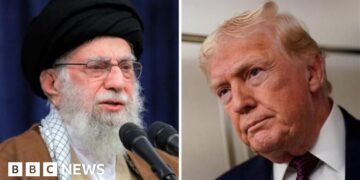























U.S. Weighs Military Options Amid Iran Protest Crackdown
The Trump administration is considering a range of military and covert actions in response to Iran’s violent crackdown on anti-government protests, which have resulted in over 600 deaths in recent weeks. As tensions escalate, President Trump has indicated that military intervention, including potential airstrikes, remains on the table.
Why It Matters
The situation in Iran represents a critical moment not only for the Iranian people as they confront a violent regime, but also for U.S. foreign policy in the Middle East. The administration’s options could significantly impact diplomatic relations and exacerbate the already strained ties between the U.S. and Iran.
Key Developments
- President Trump has been briefed on military and cyber options for intervention in Iran, according to Defense Department officials.
- A meeting of Trump’s national security team is scheduled for Tuesday to discuss the ongoing crisis.
- In a recent social media post, Trump announced a 25% tariff on goods from nations that maintain commercial ties with Iran.
- Iran’s Foreign Minister has expressed openness to negotiations but reiterated the nation’s readiness for conflict.
- Human rights organizations report the death toll from protests may be higher than officially documented, with accusations of misinformation coming from Iran.
Full Report
Military Options Under Consideration
According to sources close to national security, options being evaluated by the Pentagon include long-range missile strikes, cyber operations, and psychological campaigns aimed at undermining Iranian leadership. These discussions come amid rising calls for a response to the government’s violent suppression of dissent.
President Trump has stressed that the U.S. military is preparing “very strong options” should the situation worsen and indicated that military action might precede diplomatic efforts if discussions with Iranian leaders stall. White House Press Secretary Karoline Leavitt noted that communications from Iranian officials have indicated a willingness to negotiate, yet she emphasized Trump’s determination to utilize military force if deemed necessary.
Economic Pressures and Tariffs
On Monday, Trump declared a 25% tariff on goods from countries interacting with Iran, a move aimed at increasing economic pressure on Tehran. The Iranian economy is already struggling, with inflation skyrocketing food prices by up to 70%. Tariffs could further exacerbate these economic challenges and trigger deeper shortages within the country.
Domestic Reactions in Iran
In Iran, Supreme Leader Ayatollah Ali Khamenei condemned U.S. actions, accusing America of deceit while praising state-sponsored demonstrations purportedly supporting the government. Meanwhile, pro-government rallies have taken place across the nation, bolstered by organized text messages inciting participation while warning against anti-government actions.
Human Rights Concerns
According to the human rights organization Iran Human Rights, the death toll from protests has surpassed 648, including several young individuals. Reports highlight that the actual number could be exponentially higher, reflecting the difficulties in obtaining reliable information amid an ongoing internet blackout throughout the country.
Context & Previous Events
This recent unrest arises from widespread dissatisfaction with the Iranian government, particularly concerning economic mismanagement and currency collapse. Exiled figures like Reza Pahlavi have called upon the U.S. to intervene swiftly to protect protesters, characterizing the Iranian government’s bargaining stance as misleading.
The situation poses serious questions about international responses to authoritarian regimes and the effectiveness of economic sanctions as a tool for promoting democratic change.