






















Trump Announces “Warrior Dividend” Amid Economic Backlash
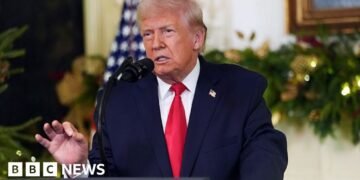
US President Donald Trump unveiled a “warrior dividend” payment for military personnel during a national address on Wednesday, simultaneously defending his economic record after a contentious period in office. The initiative, which includes a one-time payment of $1,776 for 1.45 million service members, is scheduled to be distributed before the holiday season.
This announcement comes at a time when economic dissatisfaction is rising among Americans, with many struggling to cope with increasing living costs. The decision to fund these payments partially through tariffs still evokes mixed reactions, underscoring the complexity of economic issues affecting households across the nation.
Key Developments
- Trump announced checks totaling $2.57 billion will be sent to military members as a “warrior dividend.”
- The payments are funded by tariffs and legislation Trump signed on July 4.
- While prices on some items have decreased, many others remain high, leading to frustration among voters.
- Democrats criticized Trump’s claims, arguing he is disconnected from everyday Americans’ struggles.
- Recent polling highlights declining approval for Trump’s economic management, with many voters concerned about their financial situation.
Full Report
Announcement and Justification
In his recent address, President Trump touted his administration’s achievements while framing the “warrior dividend” as a tribute to America’s founding in 1776. He emphasized that “nobody deserves it more than our military” and noted the checks are on their way to recipients.
Economic Context
Trump’s assertions regarding the economy included claims of falling prices. However, many Americans have expressed dissatisfaction with rising costs for essential items like housing and healthcare. Economic data indicates the US inflation rate stood at 3% in September, contributing to increasing voter concerns about living expenses.
Political Reactions
Senate Minority Leader Chuck Schumer condemned Trump’s remarks, claiming they reflect a lack of awareness regarding the challenges faced by ordinary Americans. He criticized the speech as a “victory lap” that did not address the pressing issues voters are experiencing, including skyrocketing living costs.
Polling Insights
New polling data suggests a significant portion of the electorate, including many Trump voters, view the economic situation as dire. Reports indicate that Trump’s approval ratings concerning economic issues have seen a notable decrease, dropping by 15 points since March. This decline reflects the struggles of the Republican Party in recent elections amid rising Democratic support.
Future Implications
As the administration prepares for upcoming midterm elections, the challenge of addressing economic concerns remains crucial. Previous runs indicate that incumbents often face difficulty when the economy is perceived negatively, factor which may influence future polling and election outcomes.
Context & Previous Events
Trump’s address highlighted ongoing economic challenges, including his acknowledgment of rising prices impacting his party’s candidates in the recent elections across several states. In response to falling approval ratings and increasing dissatisfaction, the Republican Party and the White House are actively strategizing on how to better communicate their economic policies.