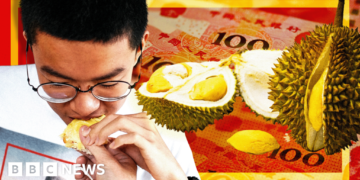























China’s Durian Demand Transforms Southeast Asia’s Farming Towns
The burgeoning appetite for durians in China is reshaping economies across Southeast Asia, particularly in Malaysia’s Raub, known as the heartland of the prized Musang King variety. As exports to China skyrocket, local farmers are pivoting their operations to capitalize on this lucrative market, signaling both an economic boon and potential challenges ahead.
Why It Matters
This transformation is crucial not only for the local economies reliant on durian cultivation but also for international trade dynamics, as countries vie for market share in this niche. Consequently, the surge in durian demand plays a vital role in shaping agricultural practices, influencing prices, and presenting complex challenges like food safety concerns and property disputes.
Key Developments
- Record Exports: In 2024, China imported a staggering $7 billion worth of durians, tripling the amount from 2020.
- Rising Popularity: Durian consumption is on the rise in China, where the fruit is viewed as an exotic status symbol and a culinary curiosity.
- Economic Shifts: Farmers in Malaysia are transitioning back to durian farming after previously prioritizing oil palm cultivation.
- Emerging Competitors: States such as Hainan in China are attempting to cultivate their own durians, posing a future challenge to established producers like Malaysia.
Full Report
A New Era for Raub
Raub, a small town in Malaysia that was once known for gold mining, has reinvented itself as a leading hub for durian production, particularly the Musang King variety. Trucks frequently traverse the region, laden with the unmistakable, aromatic fruit, which has become emblematic of the area’s economic resurgence. Local authorities have embraced the durian’s significance, with murals and sculptures celebrating its status as “the King of fruits.”
Economic Impact
Farmers like Uncle Thing, who owns multiple durian farms and a shop, already see the benefits of this durian boom. His operations have transformed from basic transportation to utilizing modern vehicles, reflecting an increase in revenue. As demand rises, so too does the price of premium varieties; while standard durians start at under $2, high-quality Musang Kings can command prices of up to $100.
A Culinary Status Symbol
In China, durians have emerged from their pungent reputation to become sought-after luxury items, exchanged among the affluent and showcased on social media platforms. The fruit’s strong, divisive smell has not deterred enthusiasts; instead, it has fueled fascination, leading to innovative culinary adaptations such as durian pizza and chicken hotpot.
Farmer Struggles and Challenges
Despite the wealth potential, the farming life remains arduous. Uncle Thing highlights the physical toll of durian farming, indicating that the perceived ease of earning profits is deceptive. Additionally, the rapid expansion of the durian market has led to conflicts, particularly regarding land use. Local authorities in Raub have started to remove durian trees they claim were planted illegally, igniting disputes with farmers who argue they have used the land for generations.
China’s Broader Strategy
In a bid to bolster their own durian supply, Chinese provinces like Hainan are initiating cultivation projects, influencing future competitiveness in the market. This desire for "durian freedom" reflects China’s broader agricultural aspirations to reduce dependency on foreign imports amidst rising food security concerns.
Context & Previous Events
Historically, Raub’s economy heavily relied on gold mining until shifts in agricultural trends led to the rise of oil palm plantations during the 1990s. Following economic downturns, many farmers, having previously cut down durian trees, are now reversing their decisions to meet the booming durian demands of China. The regulatory landscape is also evolving, with renewed scrutiny around food safety leading to fears that issues from other producing countries, like Thailand, will reverberate across markets.
In conclusion, as Southeast Asian farmers navigate this evolving landscape, the sweet smell of durians has never been more critical to their livelihoods and regional economies, even while concerns loom over potential shifts in market dynamics and agricultural practices.