






















U.S. Military Action in Venezuela Sparks Congressional Debate
The Trump Administration’s recent military actions in Venezuela have ignited a heated discussion among lawmakers following the capture of President Nicolás Maduro. The U.S. strategy, which involved strikes against alleged drug trafficking operations in the Caribbean, has raised questions about constitutional authority and the future actions of the government.
Why It Matters
This development has significant implications for U.S. foreign policy, particularly in Latin America. As tensions escalate, the balance of power within Congress regarding decisions on military intervention is being tested, potentially reshaping the longstanding protocols governing such actions.
Key Developments
- U.S. strikes in Venezuela led to the arrest of President Nicolás Maduro, who is now facing drug-related charges in the U.S.
- President Trump announced that Maduro and his wife are on a U.S. Navy ship heading to New York for trial.
- Congressional leaders were briefed post-operation, with criticisms regarding prior notifications.
- Congressional Republicans largely praised Trump’s actions, while some expressed concerns about military engagement without explicit congressional consent.
- Democrats have called for immediate briefings and accountability regarding the military strike.
Full Report
Arrest of Maduro and U.S. Military Strike
In a dramatic move early Saturday, President Trump disclosed that Nicolás Maduro had been arrested and placed aboard a U.S. Navy vessel en route to New York. He emphasized that the U.S. would temporarily govern Venezuela until a suitable transition could occur.
Secretary of State Marco Rubio confirmed that Congress was briefly informed after the operation commenced, citing the need for operational security. Trump justified the lack of prior notification by stating, "Congress has a tendency to leak," which could have jeopardized the mission.
Congressional Reactions
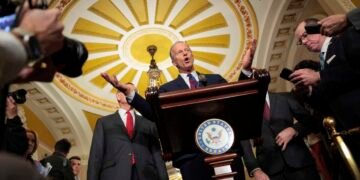
Senate Majority Leader John Thune expressed support for Trump’s decisive actions, viewing them as necessary for justice against Maduro, who has been indicted in the U.S. for drug offenses. He stated he would seek additional briefings on the operation as part of a broader counternarcotics strategy when Congress reconvenes.
Conversely, Rep. Don Bacon acknowledged the positive implications for Venezuelans and the broader region but raised concerns about potential justifications for aggression from global powers like Russia and China. Initially questioning the constitutional basis for the attack, Senator Mike Lee later reported that Rubio explained the action was warranted to protect those executing the arrest warrant.
Democratic Concerns
Democratic leaders voiced substantial criticism of the military operation, emphasizing a lack of congressional authorization. House Minority Leader Hakeem Jeffries called for an immediate and thorough briefing, insisting that the administration must provide "compelling evidence" to support this military action. He underscored that Congress possesses the exclusive authority to declare war, citing the importance of legislative oversight.
Senator Tim Kaine indicated that he would push for a resolution to prevent similar interventions without congressional consent. He pointed out the need for Congress to reassert its constitutional role in military matters amid these developments.
Context & Previous Events
This operation follows months of escalated U.S. military actions in the Caribbean, where 35 strikes against alleged drug trafficking operations have occurred since early September, resulting in at least 115 fatalities. These actions have triggered growing scrutiny among congressional members regarding the administration’s military strategies in Latin America and their implications for global diplomacy.






