






















Togo Balances Diplomatic Relationships Amid West African Turmoil
Political maneuvering in West Africa is intensifying, as Togo’s President Faure Gnassingbé skillfully navigates a complex web of alliances, seeking to align with both traditional European partners like France and emerging powers such as Russia. This strategy has gained importance in light of recent political instability in neighboring Benin, reflecting broader geopolitical shifts in the region.
Why It Matters
As several West African countries grapple with the legacies of colonialism and evolving governance models, Togo’s diplomatic balancing act signifies a desire for greater autonomy and diversification of international relationships. This development may alter the dynamics of power within the Economic Community of West African States (ECOWAS) and enable Togo to enhance its regional influence.
Key Developments
- Following a failed coup attempt in Benin, the rebel leader reportedly sought asylum in Togo, highlighting the nation’s strategic position.
- Gnassingbé has cultivated supportive ties with military regimes in Burkina Faso, Mali, and Niger, while cautiously engaging with countries like France.
- Recent high-profile meetings between Gnassingbé and Russian officials included discussions on a defense partnership, expanding Togo’s military capabilities.
- The Togolese government emphasizes that diversifying relationships is not an overt rejection of Western ties but a natural progression.
Full Report
Diplomatic Maneuvering
Togo’s geographical and strategic importance under Faure Gnassingbé is becoming increasingly evident. The recent events surrounding the attempted coup in Benin showcased Togo’s discreet involvement. Rebel leader Lt Col Pascal Tigri reportedly escaped into Togo en route to potential asylum in Burkina Faso or Niger. While Togo has not officially acknowledged any role in aiding Tigri, this move highlights the nation’s position as a hub amidst regional instability.
Gnassingbé’s approach appears pragmatic, fostering relationships with both ECOWAS nations and military governments. Despite limited ties with Benin’s President Patrice Talon, he actively engages with Burkina Faso and the Sahelian military regimes, all of which disaffiliated from ECOWAS in early 2023.
A Shift to Russia
Gnassingbé’s recent visit to Moscow underscored this diversification, as he entered a military cooperation agreement with President Vladimir Putin. This includes provisions for joint exercises and the use of Togo’s deepwater port, which is vital for the landlocked Sahel states. The alliance with Russia raises concerns in France, traditionally a close ally of Togo.
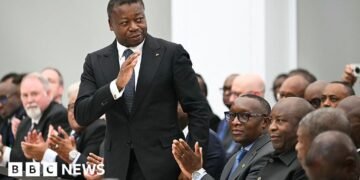
While President Emmanuel Macron’s recent meeting with Gnassingbé aimed to reinforce bilateral ties, the timing of Gnassingbé’s Moscow trip has sent mixed signals about Togo’s foreign policy direction. The Togolese government maintains that it is merely diversifying its international relationships, avoiding the notion of a definitive shift away from the West.
Domestic Landscape
Domestically, Togo has seen mounting criticism and protests following changes that transformed the presidency into a largely ceremonial role, transferring significant powers to the prime minister. The constitutional alterations have led to allegations of political repression, particularly against dissenters and critics of the regime.
In response to international pressure, including a recent resolution from the European Parliament urging the release of political prisoners, Gnassingbé hinted at potential legal reassessments. Such gestures may suggest an awareness of underlying discontent, despite his outward diplomatic confidence.
Context & Previous Events
Historically, Togo has been viewed as a steadfast ally of France. However, the changing landscape of West Africa has prompted many nations, including Togo, to explore broader alliances. The government’s embrace of organizations like the Commonwealth, alongside membership in the International Francophonie Organization, illustrates its commitment to diversifying international presence.
In a region where colonial ties still influence politics, Togo’s balancing act represents a quest for sovereign identity in an increasingly multipolar world. As these dynamics evolve, Togo’s decisions will likely resonate beyond its borders, impacting neighboring states and international relations across the continent.