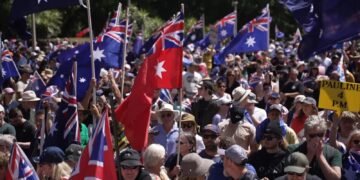























Tensions Rise in Australia Over Migration as Protests Intensify
Australia’s summer ushers in a wave of unrest centered on migration policies, marked by months of protests that have drawn thousands into the streets. As the nation grapples with its increasing diversity, public clamor echoes concerns regarding infrastructure and the sustainability of these migration levels.
Why It Matters
The ongoing protests not only reflect deep-seated anxieties about migration but also highlight a growing polarization in Australian society. As the country approaches a pivotal moment in its history, discussions surrounding immigration, nationalism, and public resources have intensified, revealing divergent views among Australians.
Key Developments
-
Nationwide Protests: In August, approximately 50,000 individuals participated in demonstrations across multiple cities, with clashes reported between far-left and far-right groups.
-
Escalating Tensions: Recent protests have seen accusations of violence, particularly from police targeting far-left participants who allegedly clashed with right-wing protesters.
-
Migration Statistics: Following a pandemic-induced decline, net overseas migration surged to 1.4 million in recent years but has since fallen by nearly 40% from its peak.
-
Political Discourse: The far-right’s visibility has increased, with neo-Nazi groups participating in rallies and making provocative statements that have raised eyebrows across the political spectrum.
- Government Response: In reaction to public sentiment, the Australian government is contemplating stronger laws against displays of neo-Nazi ideologies and addressing the public’s housing vulnerabilities.
Full Report
Protests Spark Nationwide Dialogue
In August, cities across Australia became battlegrounds for competing ideologies as protests against high migration levels took shape. Sydney protester Fran Grant, a regular at these rallies, expressed her discontent with the prevailing migration policies, arguing that the country lacks adequate infrastructure to support new arrivals. “I have no problem with that if we have the infrastructure to support it, but we don’t,” she stated.
A Multicultural Landscape
In suburban areas like Auburn, where 80% of families speak a language other than English at home, local leaders like Steve Christou have voiced the necessity to pause immigration until Australia’s infrastructure can adequately absorb the influx. “We’re not blaming the migrants; we’re blaming the government for unsustainable numbers,” he emphasized.
The Emboldening of Extremist Groups
The protests have also served as a platform for far-right elements, including neo-Nazis. Their presence in the protests has raised alarms within the community. Mehreen Faruqi, deputy leader of the Australian Greens, warned of the normalization of extreme ideas as these groups become more prominent in public discourse.
Divided Opinions
While some organizers like Bec "Freedom" maintain that neo-Nazis are simply "proud Australians" opposing mass immigration, many attendees at the rallies distance themselves from violent ideologies. This division illustrates a complex narrative where pride in national identity intersects with issues of race and immigration policy.
Context & Previous Events
In recent years, Australia’s immigration policies have experienced dramatic shifts, particularly in response to the COVID-19 pandemic. Strict border controls resulted in a sharp decline in migration but led to a significant influx once restrictions were lifted. With 1.4 million new arrivals in just three years, various segments of the population are beginning to question the government’s capacity to manage these numbers sustainably.
Events have escalated, with political figures like Pauline Hanson of the One Nation party stirring controversy by advocating for a public ban on religious garments like the burqa. Her party has gained traction among disillusioned voters, further complicating the national discourse on immigration and multiculturalism.
As Australia stands at this crossroads, the unfolding events raise critical questions about the future of migration and the societal impact of rising nationalistic sentiments.