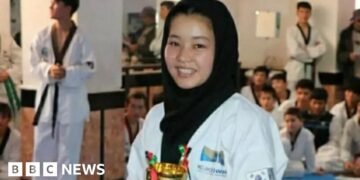























Khadija Ahmadzada Released After 13 Days in Taliban Custody
A 22-year-old Afghan woman, Khadija Ahmadzada, has been released from detention after spending 13 days in jail for allegedly violating Taliban regulations concerning women’s sports facilities. Her case has garnered international attention, underscoring ongoing human rights concerns in Afghanistan under Taliban rule.
Why It Matters
The situation highlights the continued restrictions placed on women’s rights and freedoms in Afghanistan since the Taliban regained power in 2021. Ahmadzada’s detention, tied to her efforts to promote sports for girls, reflects broader societal challenges as the Taliban enforces its stringent interpretation of Islamic law, limiting opportunities for women and girls in education and athletic pursuits.
Key Developments
- Khadija Ahmadzada was detained alongside others for anti-Taliban violations reported by officials.
- She faced charges including improper hijab, playing music, and allowing gender mixing in her gym.
- She was sentenced to 13 days in jail but was released by the supreme court on January 23.
- Ahmadzada had previously received warnings from the Taliban’s ministry of vice and virtue.
- The detainment has sparked outrage on social media, drawing the attention of human rights advocates.
Full Report
Detention and Charges
Khadija Ahmadzada, who operated a taekwondo gym for girls near Herat, was detained after officials identified several alleged breaches of Taliban regulations. These included accusations of failing to wear a proper hijab, permitting both genders to train together, and playing music in her facility. Her case was referred to the Taliban supreme court following her 13-day jail sentence.
Release and Reactions
On January 23, the Taliban’s supreme court confirmed Ahmadzada’s release. It remains unclear where she currently is. The news of her detention ignited considerable backlash on social media platforms, leading to calls for her immediate release from figures such as Richard Bennett, the United Nations’ special rapporteur on human rights in Afghanistan. He highlighted both Ahmadzada’s case and that of Nazira Rashidi, a female journalist detained in Kunduz in December, stressing the ongoing suppression of women’s rights in Afghanistan.
Context & Previous Events
Since the Taliban regained control of Afghanistan in 2021, sports facilities for women have been shuttered. Officials stated that they would reopen once a “safe environment” was established, compliant with their interpretation of Islamic law. However, as of January 2026, no sports clubs for women have reopened, and restrictions on their participation in various activities remain stringent.