























Syria Celebrates One Year Since Assad’s Ouster Amid Ongoing Challenges
Syria marked the first anniversary of Bashar al Assad’s ousting with celebrations in Damascus, reflecting a collective euphoria following decades of repression. However, the new government now faces significant hurdles while striving for stability in a country desperate for economic revival and political unity.
Why It Matters
The celebration represents a pivotal moment in Syria’s tumultuous history. With the downfall of a long-standing oppressive regime, the nation has embarked on a rocky journey toward freedom and democratic governance. The developments over the past year could determine not only Syria’s future but also the stability of the region, especially amid ongoing foreign interventions.
Key Developments
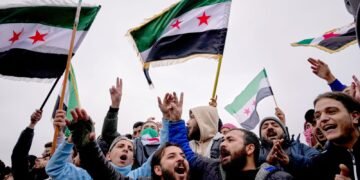
- Celebration of Freedom: Thousands gathered in Damascus to commemorate the anniversary, symbolizing the widespread desire for liberation from Assad’s regime.
- Emerging Leadership: Ahmed al Sharaa, a revolutionary leader, has gained international recognition, marking the first visit to the White House by a Syrian leader since the Assad regime’s fall.
- Economic Prospects: U.S. sanctions are being lifted, leading to potential foreign investments, particularly from Turkey and Gulf nations.
- Regional Tensions: Israel’s military actions in southern Syria have raised concerns about continued instability and intervention in the new government’s efforts to maintain order.
- Security Issues: Allegations of violence against minority communities highlight the government’s struggle for inclusive governance.
Full Report
A Historic Celebration
Last December, feelings of jubilation swept through Syria as the nation celebrated a year since the fall of Bashar al Assad. The fervor was evident in the streets of Damascus, where citizens engaged in exuberant displays of freedom that had long been suppressed under the previous regime.
Challenges Ahead
Despite this celebratory atmosphere, Syria is grappling with significant issues. Order has been maintained, albeit with exceptions, as the new leadership navigates the complexities of governance. Ahmed al Sharaa has emerged as a significant figure, gaining unprecedented diplomatic ties with the United States during his recent visit, where he received an unexpected personal gesture from President Donald Trump. This diplomatic recognition may signal a new chapter for Syria, but concerns remain.
Israeli Concerns
While Sharaa’s administration has seen some success in dismantling the oppressive structures of the past, the international community’s response, particularly from Israel, is laden with skepticism. Israeli airstrikes have targeted military resources that could have been pivotal for the new government, further complicating efforts to establish control and stability.
Initial Progress
Sharaa’s government has made strides, such as the release of prisoners and a more tolerant approach toward cultural practices. Women are being encouraged to engage in political life, offering a glimmer of hope for a more inclusive society.
Growing Worries
Nonetheless, the emerging government faces grave accusations regarding violence against Alawite and Druze minorities, raising significant moral and ethical questions. The successes in governance have not yet translated into effective political unity or a settled peace, leading many to question the sustainability of the progress achieved thus far.
Context & Previous Events
The fall of Bashar al Assad, long seen as a tyrant by many, marked a significant turning point after over fifty years of authoritarian rule in Syria. The subsequent celebrations demonstrated a yearning for liberation and change. Ahmed al Sharaa, a key figure in the revolutionary movement, was the first Syrian leader to engage with the U.S. in such high-profile diplomacy following Assad’s departure, highlighting shifts in the country’s political landscape.
As Syria continues on its complex journey, the hope for a stable future hangs in the balance, with both opportunities and significant threats emerging on the horizon.