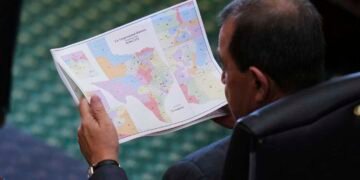























Supreme Court Allows Texas’ Redesigned Congressional Map, Boosting GOP Prospects for 2026
The Supreme Court has authorized Texas to implement a newly redrawn congressional map, a decision that may enhance Republican opportunities to capture five additional U.S. House seats in the upcoming 2026 midterm elections. This ruling comes amidst escalating gerrymandering disputes, as former President Trump has urged Texas and other Republican-led states to modify their electoral districts to favor GOP candidates.
Why It Matters
The ruling significantly impacts the political landscape of the upcoming midterm elections and could bolster the Republican Party’s fragile hold on the House of Representatives. The decision to permit Texas to use the controversial map raises concerns about racial gerrymandering and its implications for voter representation, especially among minorities in the state.
Key Developments
- The Supreme Court’s order was based on Texas’ urgent request to proceed with the map, which had been previously blocked by a three-judge panel.
- The panel had initially found that the new congressional map likely violates constitutional protections against racial discrimination in voting.
- Justices criticized the lower court for hampering the electoral process during an active primary campaign, suggesting it misapplied the standards of legislative good faith.
- Dissenting Justices, including Elena Kagan, argued that the ruling perpetuates racial discrimination in electoral districts.
- Texas’ Attorney General Ken Paxton hailed the decision as a victory for the state’s political climate and conservative values.
Full Report
Supreme Court Ruling
The Supreme Court ruled in favor of Texas, allowing the newly drawn congressional map to take effect, a decision that could reshape the political balance in the state. The unanimous ruling noted that the three-judge panel had not adequately considered the presumption of legislative good faith in their prior assessment, which could lead to electoral instability during the candidate filing period.
Reactions
Attorney General Ken Paxton expressed satisfaction, stating that the ruling reflects Texas’ political environment and protects conservative interests against perceived liberal overreach. In contrast, Democrats criticized the Supreme Court’s decision, claiming that it compromises the voting rights of marginalized groups. U.S. Representative Suzan DelBene voiced concerns that the map was drawn to diminish minority electoral power, asserting that it was created under pressure from national Republicans.
Legal Challenges Persist
While Texas moves forward with its updated map, the redistricting landscape remains contentious across the nation. Various states, including California and North Carolina, are undergoing legal disputes relating to their congressional maps. California’s recent special election resulted in a map designed to potentially secure additional seats for Democrats, while North Carolina’s court has permitted its midterm elections to proceed under a newly drawn GOP-friendly map.
Context & Previous Events
In August, Texas Republicans initiated a contentious redistricting process that set off legal battles and accusations of racial gerrymandering. The three-judge panel’s ruling, which blocked the new map, pointed out evidence suggesting that Republican lawmakers deliberately manipulated voter demographics. Past Supreme Court decisions have established precedents against racial gerrymandering, leading to ongoing scrutiny of redistricting efforts across the country as states brace for the crucial 2026 elections.






